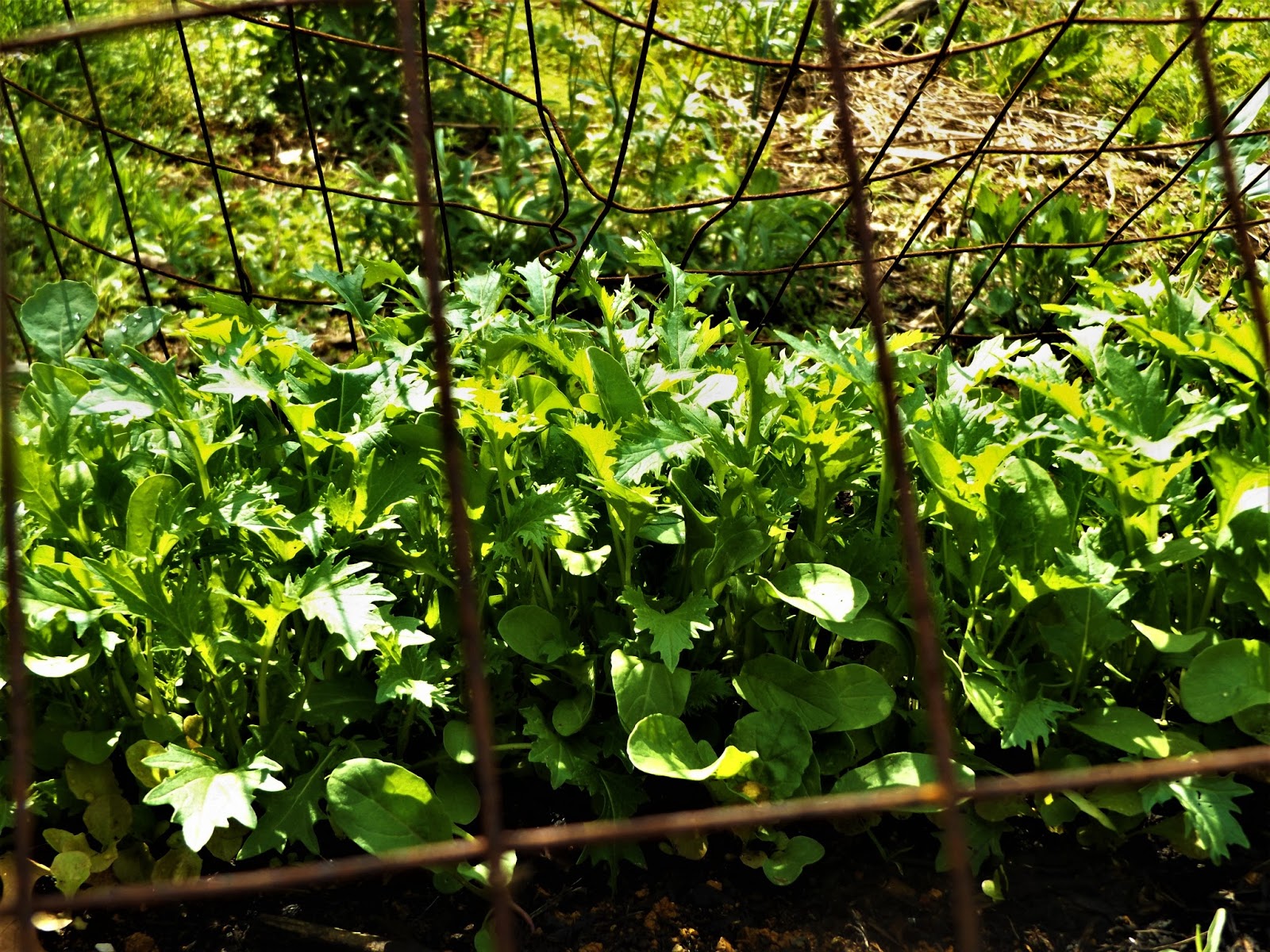
Greens (lettuce, cabbage, spinach) and root vegetables (beets, potatoes, turnips) are the best choices for
shady gardens. To clarify, the greens and root vegetables perform better in full sun during the colder months, while they perform better in the shade during hot Summer months.
Steve Albert of Harvest to Table wrote on the topic Vegetables and Herbs for Growing in Shade stating that the advantages of growing vegetables in shade include: 1) Leafy crops grown in partial shade will be succulent and free of bitter taste; 2) A partially shaded garden allows for a longer growing period for cool-season crops; 3) Afternoon shade protects crops from the hot summer sun.
Fruiting vegetables such as tomatoes, peppers, and eggplants grow poorly in shade, however. What I have noticed with Tomatoes grown in partial shade , they focus on growing tall to reach sunlight, instead of focusing on growing a strong stable stalk to support large fruits.
Steve Albert lists some of his own tips for growing in shade, for example: 1) Choose vegetables and herbs adapted to shade; 2) Start crops for shady gardens indoors to speed harvest; germination
and early seedling growth can begin under optimal conditions before
transplanting to the shady site; 3) Pruning away low tree branches and thinning out high branches will allow more sunlight to reach the garden; 4) Painting nearby walls or fences white will allow more light to
bounce into the garden. I have even seen gardeners use aluminum foil to reflect light; 6) Grow crops in containers so that they can be moved into sunny spots as the seasons change.
In the tables below, I have listed Vegetables, herbs, and flowers adapted to growing in partially shaded gardens. A partially shaded garden receives at least 2-6 hours of direct sun according to Steve Albert. This list also includes vegetables and herbs that can be grown in colder (climates) or during cooler months (Spring & Fall):
Vegetables & Greens
Arugula
|
Beets
|
Broccoli
|
Brussels
sprouts
|
Cabbage
|
Carrots
|
Cauliflower
|
Celery
|
Chard
|
Cilantro
|
Endive
|
Escarole
|
Garlic
|
Horseradish
|
Kale
|
Kohlrabi
|
Leaf
lettuce
|
Leeks
|
Mustard
|
Napa
cabbage
|
Parsnips
|
Peas
|
Potatoes
|
Radishes
|
Rutabagas
|
Salsify
scallion
|
Sorrel
|
Spinach
|
Turnips
|
Watercress
|
Herbs
Angelica
|
Basil
|
Black
Cohosh
|
Bloodroot
|
Catnip
|
Chervil
|
Chives
|
Costmary
|
Downy
Rattlesnake Plantain
|
Garden
cress
|
Germander
|
Ginger
|
Goldenseal
|
Lemon
balm
|
Lovage
|
Mint
|
Parsley
|
Rosemary
|
Solomon’s
seal
|
Spikenard
|
Sweet
flag
|
Sweet
woodruff
|
Thyme
|
Wood
Poppy
|
Flowers & Perennials
Alpine
|
Alstilbe
|
Anemone
|
Balsam
|
Bee
balm
|
Beefsteak
Plant
|
Bergenia
|
Browallia
|
Brunnera
|
Coleus
|
Cowslip
Primrose
|
Ferns
|
Foamy
bells
|
Fuchsia
|
Hostas
|
Impatiens
|
Jacob's
Ladder
|
Lilyturf
|
Lobelia
|
Oxalis
|
Perilla
|
Polka-dot
plant
|
Torenia
|
Viola
|
The picture below demonstrates growing shade tolerant Vegetables, greens, and flowers in a polyculture system.
Above I mentioned growing varieties of Hostas, Ferns, Lilyturf, and other shade tolerant Perennials which you can see demonstrated in the photo here: