Showing posts with label live for free. Show all posts

Friday, April 14, 2017

Potatoes planted in handmade grow bags


For the first week we kept a plastic sheet over top of the potatoes and secured the plastic with rebar and rocks to hold in place. Now that this week is going to be in the 80s, I uncovered the potatoes that are growing in these hand made bags my partner made. My partner stitched the bags and I glued the bottoms, then we shoveled compost into each bag, and then planted on average 3 potatoes per bag. I believe there are 20 bags here.
We have more potatoes chitting under a grow light and laying out on cardboard underneath the lights. This chitting process helps the potatoes to begin to spud and we will either plant the remaining potatoes in grow bags or tilled up an area in the garden to sow them in a mound.

Tuesday, August 2, 2016

Chanterelle mushrooms from the woods!


Lightly cook with a little oil and salt after removing dirt and washing. Steam mushrooms and serve over noodles, rice, sandwich, or anything!

Saturday, June 11, 2016

Food Not Bombs Initiative

From "FAQ" section of Food Not Bombs website:

"The government and corporations find our message – that we could redirect the taxes that currently are used on the military to fund things like education and healthcare – a threat to their profits and power. They also worry that our sharing of food with the hungry shows that we can end hunger. They fear that the sharing of food and literature with the message Food Not Bombs in high-visibility locations is an effective way to inspire public pressure for change to our political and economic system. In 2009, two U.S. State Department officials gave a lecture at the Fletcher School of Diplomacy in Medford, Massachusetts comparing the group that shares vegan meals in parks and al-Qaeda; they said the people sharing the food were a greater threat than al-Qaeda because people visiting their meals would be influenced to support policies diverting tax dollars from military spending towards education, healthcare and other social services...
"Americans discard over 40 percent of the food that is produced. 1,400 calories worth of food is discarded per person each day, which adds up to 150 trillion calories per year. The United Nations reported in 2010 that all one billion people that go hungry could be fed by the food that is wasted every day...
"ood Not Bombs has worked against racism since the beginning. The first collective provided food to the people protected by the Black Liberation Army at Columbia Point Housing Projects in Boston at a time when people of color were under attack by white gangs in South Boston. The first group also organized a multi-racial free concert in Cambridge and provided food to the Mohawk nation in New York. Food Not Bombs has many volunteers from all backgrounds, races and cultures. Most volunteers in Africa are black and volunteers in Asia are Asian, and so on. Food Not Bombs volunteers have even been killed while sharing food because of their work against racism. On November 13, 2005, Timur Kacharava  was stabbed to death by racists as he was packing up the weekly meal in St. Petersburg because Food Not Bombs provides food at anti-racists actions. Several other Food Not Bombs volunteers have been murdered by racists in Russia since Timur was killed. Food Not Bombs also organizes a People of Color Caucus at our gatherings and seeks to include all in the work of ending racism...
"over 17 percent of the people went hungry every month in 2010 and the United Nations is warning of a huge increase in hunger in 2012. U.S. Census data show that nearly half of all Americans struggle to survive. The United States is not alone. The global economy is in crisis. Hunger and poverty are increasing in every area of the world. When over a billion people go hungry every day, how can we spend another dollar on war? Why do we spend fifty cents of every federal tax dollar on the military when millions go hungry and are forced out of their homes here in the United States"

Monday, October 26, 2015

Apple, Persimmon, & Nut Foraging in Fall months

When you think of foraging in the woods, you usually think of collecting mushrooms and wild greens, but you can forage for fruit and nuts this time of year as well. These wild edibles are much easier to identify and container more calories and nutrients. I have written a post before detailing the common wild edibles to forage during the Fall months, such as chickweed and green onions (which you can read here).
I have many hickory trees dropping their nuts between September and into November around the yard, so I can pick hickory nuts to eat, but since I am competing with the squirrels, I do not bother picking them. Other nuts I forage during this time of year are Walnuts and Pecans. I find that Walnut trees have become prevalent on the sides of roads in Kentucky, so you'll most likely be able to harvest a bucket full of walnuts when walking along roadsides. Every year, James and I pick walnuts and pecans.
Fruits to forage this time of year are Pears, apples, and persimmons. These fruit trees may not be growing in the woods, but they may be growing in an abandoned lot or alongside the road; but there is no need to forage these fruits when your neighbors have them growing in their yard. I have actually picked some apples and persimmons from neighbors' trees because they did not want them.

My struggle with picking persimmons is that I have to wait till they drop to ensure they are ripe. I recommend freezing persimmons overnight to take out the astringent properties. Here are the photos I took of our Apple and persimmon forage. I did not pick many persimmons because there were not many on the ground. It seems that the squirrels and other critters are getting to them quicker than I.


Sunday, July 19, 2015

Foraging Chanterelle & Chicken of the woods mushrooms in July

For the last month, James and I have been foraging several types of berries and mushrooms, in the woods behind our house. We have picked Dewberries, huckleberries, raspberries, and blackberries. The berry picking has come to an end; mostly because of the daily, heavy rainfall.
While foraging for berries, we also harvested Chanterelle and Chicken of the woods mushrooms. These mushrooms are easy to identify, especially Chicken of the woods. Because we have had so much rain in Kentucky, it has been one of the best years for mushrooms. Every where I look is a new and interested mushroom.

Below is a picture of today's haul of Chanterelle and Chicken of the woods mushrooms.


For a look at the other mushroom harvests, go to my previous posts here and here

Friday, July 10, 2015

Rain for weeks grows BIG mushrooms & how to forage/identify Chanterelle mushrooms

I feel very fortunate to be in part of the US that is receiving ample rainfall. In parts of the country, such as California, are experiencing drought for months. On June 1st,  urban water users in California, had to abide by the state's first ever mandatory water restrictions, by reducing consumption to 25 percent. 
Even farmers found it more beneficial to start selling their water reserves instead of growing food! 
Much of the food that is sold in the grocery store comes from California, and this could really hurt our country's food supply. This is just another reason we, the people, should take food into our own hands--strive to make the home garden the primary food source, forage wild edibles, and spread the seeds of fruit around the world. 


Of course the persistent rainfall, here in Kentucky, is assisting in the growth of the squashes and melons. Below are photos of recent garden harvests, including recent photos of the growth of birdhouse gourds, squashes, and melons.


7/6/2015 garden harvest


This rainfall has also prompted the growth of many mushroom varieties, such as boletes and chanterelles. We harvested chanterelles today from the woods in two different locations, along with a gallon of blackberries. 

This mushroom, seen below, was incredibly impressive for its size. It was definitely a bolete, but we were unsure of the variety. We concluded that it was the Bitter bolete, which is classified as poisonous. 


Chanterelle mushrooms are quite distinctive, even compared to their look-alike, the Jack-o lantern and false chanterelle. For example, chanterelle mushrooms grow individually spread out over a large patch of ground, whereas jack-o lanterns grow clustered. Chanterelles smell pleasantly fragrant like apricots, as many have suggested. The cap is convex and usually vase shaped. The gills are referred to as false gills because they appear to have lumpy folds instead of true gills. Chanterelles grow amongst the ground floor around oak trees and conifers. I find chanterelles growing in people's yards mostly, and along the edge of the woods. 
Where you know there is a grove of pines during the months of July and August, you will also find Chanterelle mushrooms. Another way to ensure you have collected Chanterelles, is by the spore print. Lay a mushroom facing down on a white sheet of paper, and within several hours you'll notice a pink spore print.

Chanterelle mushroom forage #1, July 9th 2015

For three weeks, James and I have dedicated much of our time to foraging berries around the yard and in the woods. With the extra berries we have started to make jelly. So far we have stored over 20 jars of jelly in the fridge. I hope to sell many of these at $4-5 for each half pint. When making the jelly, I strain the seeds from the blackberries so that I can throw the seed out for growing plants.

July 9th chanterelle forage #2
July 10th 2015 chanterelle forage

We are still unsure what these pink blackberries are called, but we are picking them to save for seed. I may stick each individual berry into a pot of soil.

Thursday, December 18, 2014

TINY Cob home layout

The first photo is a doodle we drew up. The cob home takes the shape of a spiral, similar to a sea shell or snail shell. I'm still unsure of the window facing North East. This is where the sun starts to rise, but I have heard from other cob builders that you'll lose heat having windows facing North East. I am definite on small windows in the South East and West, and a large window facing South.

As of now, the trench spans 26 foot wide and 26 foot in length. I'm not too certain it's that length and width because I was using my foot to estimate, since their around 10 inches. I'll get exact measurements later....
There will be 2 foot of cob walls on the outside. The entrance will be about three foot wide, depending on the door we find. The living space will be an open concept (with the kitchen counter, couch, and stove), spanning 8-10 feet in length and less than 22 feet wide. The bedroom will be surrounded by 2 foot wide cob wall spiraling inwards creating a nook. The length of the bedroom comes to 17 foot and the width of the bed about 8 foot.
Most likely, the measurements are off, especially considering I was using my feet as measurement. Since writing this post, I have already dug the trench deeper, as well expanding the house another 4 feet.
On a piece of paper, you don't realize how small this house will be until you look at the photos I posted below. Already, we have dug out the trench, which we will be digging deeper about a foot or two. Really the trench I dug is a visual of the shape of the house.

I need to save up money for a small stove to heat the house, which will have a pipe going up the wall out of the roof. In the sketch below, I have the stove up against the wall facing the living space. The wall behind the stove will release heat in the night, making our bedroom warm and cozy.


In the following photos you'll notice a trench in the shape of a half circle. Also notice the four sticks marking the entrance of the house, and one of the sticks represents the wall extending in the house creating the wall for our bedroom.
The square sheet of plastic, you see in the photos, represent the living space where the couch and stove will be placed.


My vision for the home will look similar to Ziggy and April's creation, seen below. Their home was small but efficiently designed to save space. The picture here is the outside, and the second picture is a panoramic of the interior.


I have videos discussing my process for outlining the home and digging the trench here: Digging outline/trench for cob home (video). Also, I have other posts on the topic of cob homes. For more details on cob homes and building houses for free and with all natural materials, click the links here: Constructing our own home: cob building, homesteading, & free materials and COB BUILDING (Straw, clay, & Sand for building DREAM EARTH HOME

Again, I understand that this is an incredibly TINY home to some people. I grew up in a trailer and a small house with five other people. I usually shared beds and slept on floors. I am used to living in a small conditions. I do not intend to have a shower or toilet in the house either. My only intention with this home is to have somewhere to sleep warmly at night and store food and books.

It's actually liberating to live in a small home because you understand what's most valuable in the home. Possessions are overrated and too many possessions causes a feeling of "weighed" down or you feel like you could never pack up and leave. You'll always worry if someone will rob you of your stuff as well.

7 Free last-minute holiday gifts & Crafts

Citrus and apples are in season, of course I have been buying them every week.

Instead of discarding orange peels, I have been drying them for POTPOURRI. I hate the holidays, but I always try to make crafts (free gifts) for family members since they give me gifts. Normally I eat the peels of apples, but I'm going to start saving them to dry and add to the containers of potpourri. Actually the jars I'm using were found from the woods.
This last week I've been eating Mint and vanilla bean in my smoothies, so I've saved the stems of Mint and pod of vanilla for making potpourri. I have a variety of scents I'm going for, so one of the jars will contain Orange peels, mint, and vanilla pod. Then another will have Orange peels, apple peels, and cinnamon sticks.
For a fresh Pine smell, I go to my Pine trees to pick off needles and pine cones. A different jar will contain bits of Pine cones, pine needles, and other earthy or woody materials. For example, I just-so-happened to have a piece of cedar, so James shaved curly pieces of cedar to add to the jar of Pine cones/needles.
I have a Maple tree dropping limbs, so I collect the twigs of Maple--which have small red buds during the winter. With the Maple twigs, Pine cones, pine needles, cedar shavings collected in a jar, it embodies or captures the essence of Fall and winter.
Instead of putting a lid on the jars, I have taken a piece of fabric to cover the top of the lid, then placed a rubber band around the top to hold fabric in place.

Here are some of the combinations you can work with:
Jar #1: Pine cones, pine needles, cedar shavings, maple buds, Sumac seed pods, and various Fall & winter fragrances/materials.
Jar #2: Orange peels, dried mint and other herbs, vanilla bean pods.
Jar #3: Orange peels, apple peels, cinnamon sticks, and other spices.
Jar #4: Special rocks you have found.
Jars of potpourri

Pine cones, pine needles, cedar shavings, Sumac seed pods, and maple buds


All jars seen in the photos were found in the woods. So all the materials except the fabric were "free". The other jars I found in the woods--extra small or extra large bottles--were used for a different project. Instead, I painted one bright yellow with red and orange squares around the base and neck of the jar. This jar is used for a lantern. I may not give this away as a gift.

I painted another jar with flowers and bees. As mentioned, you can make a jar filled with "special rocks" which I may do for this particular jar, seen below.


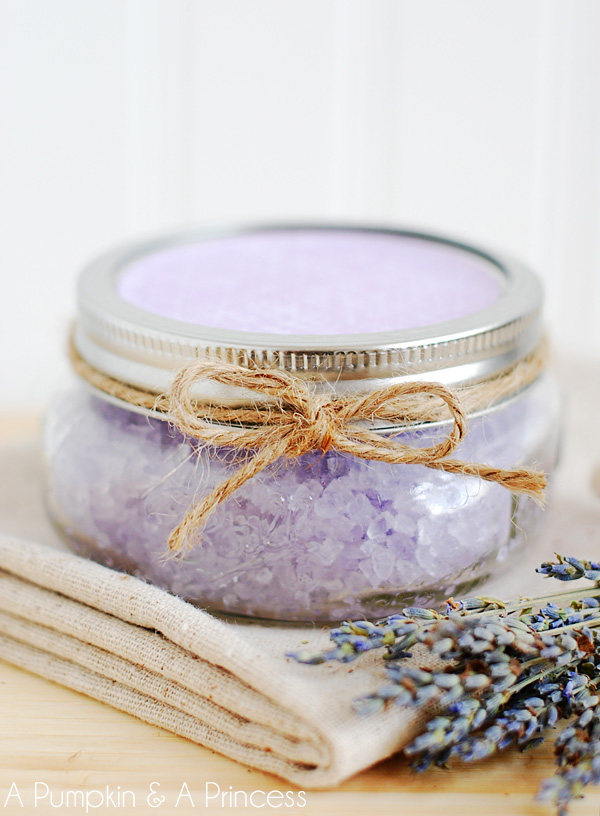
Instead of using the jars for painting and potpourri, you could make Homemade bath soaps and scrubs, or bath salts as well. One Foot Scrub (or facial scrub) I would make would be using Brown Sugar, Lemon Juice, Aloe Vera, Coconut oil. Then put mixture in a jar.
A dried toothpaste to package would be a mixture of baking soda and cinnamon.
An Oatmeal Bath could include a Jar of Rolled oats, baking soda, cinnamon, and vanilla extract.


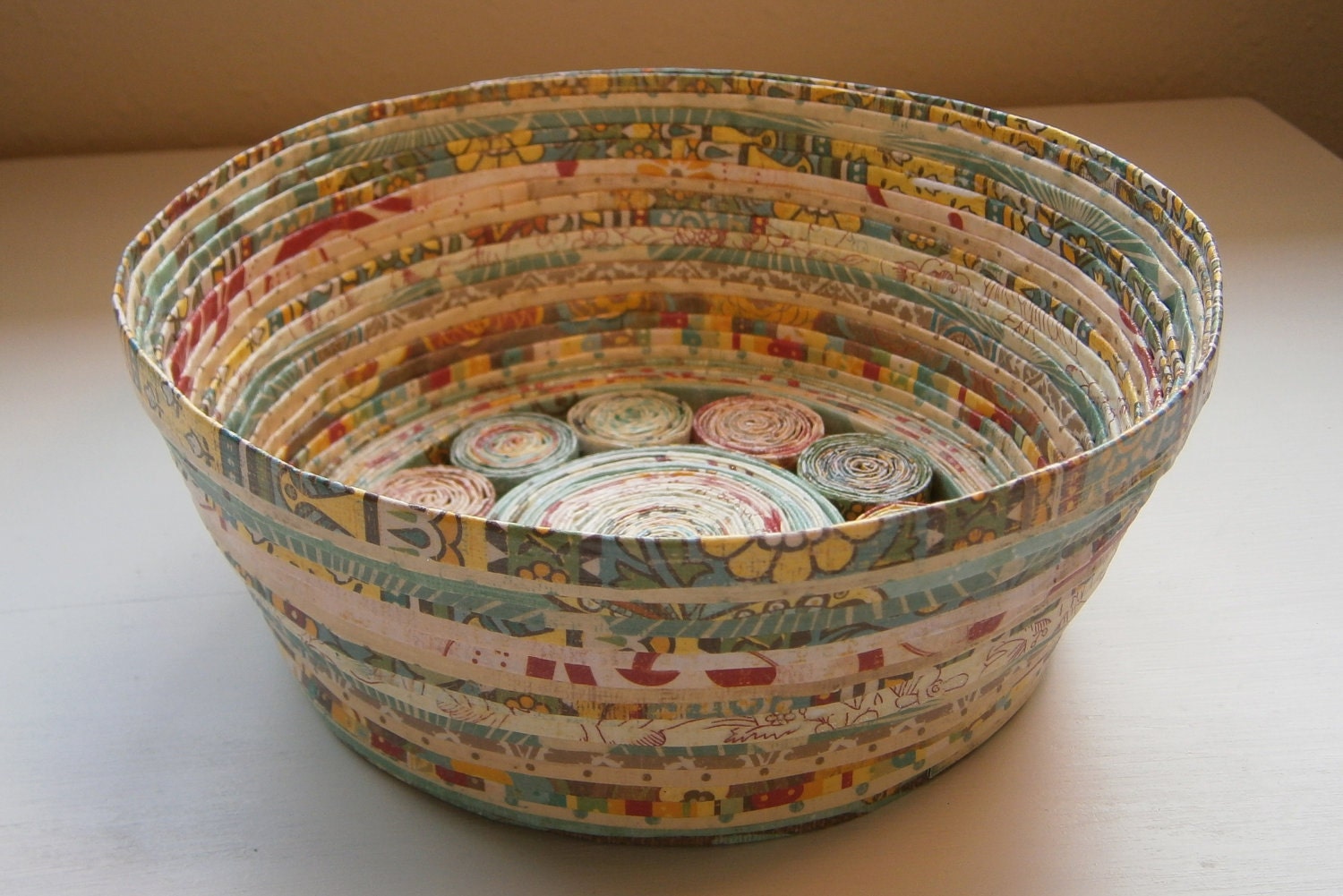
Another idea is to make a Paper sack basket, which you can find tutorials on youtube. In fact you could make a basket out of newspaper even and fill it with your homemade Soaps and scrubs, or other hand crafted items.


Other gifts I created were painting rocks. One rock was painted with my dad and his wife's name with flowers and bees. A smooth and small rock was painted with a cat's face. I really enjoy looking at others' rock painting creations, so I have posted a few pictures of other people's creations including my own.
If you intend to place these rocks outside, I recommend using Outdoor Spray paint with primer and Acrylic clear coat spray. 


Of course a painting on canvas is highly respected and valued. I give a way a couple of paintings every year. So far I've made a painting of yellow flowers (Tickseed Sunflowers) seen below. I will give this to one of my Grandmothers. I made her a small painting last year of a tiny bird, which you can see here: December 2013 Painting of Bird.

painting gift

Another great gift is to give someone a House plant or fruiting tree. I grow about five Aloe Vera plants in my house, so the "pups" or Aloe babies can be transplanted into a small container and given as a gift.

Aloe pup as gift
These creations can be given as birthday presents or a sign of gratitude. Creating your own gifts shows thought and dedication while a card or something you purchased may seem thoughtless. Plus,  I hate the idea of supporting corporations to give a gift that represents American consumerism based around a Pagan holiday turned religious. Muhaha!