Showing posts with label eco-friendly. Show all posts

Sunday, October 14, 2018

Seasonal festive holiday Nature eco gifts

The fall garden still has some bounty left, like all the flowers and herbs. There are some cherry tomatoes and peppers I'm still harvesting. Actually I harvested peppers then pickled them yesterday before I had to go to my work's gala event.
When I got home, I cut up these squashes in the pic below and cooked them with rice, ginger, garlic, salt, carrots, and apple cider.

Flowers pressed
 With the pressed flowers, I'm using them to make holiday gift ornaments, as you can see below. Many of the flowers were wild and others I picked were some I planted from seed or bought from Lowes.


I'm cleaning the garden beds

I don't think I'll be planting any winter crops, though 

I did consider sowing seeds but it would probably be futile
 I have been doing this, in addition to cleaning my garden shed and the porch greenhouse. I put up new plastic sheeting for the porch so the plants stay covered. I'm debating about bringing them indoors...

I had a gala last night for a fundraiser for work, and the higjlight of my evening was eating the morel mushrooms! The chef said my plate was worth over 100 dollars! Fancy gourmet!


Sunday, January 8, 2017

How many people lack access to clean drinking water?

After Flint changed its water source to the Flint River, its drinking water had a water crisis from lead contamination. So, let's not forget that this is a political power issue where those in power were not concerned about the people. Of course this power has to do with "saving" money by switching water sources while also failing to change the pipes in that water source. Thus, between 6,000 to 12,000 children have been exposed to drinking water with high levels of lead, experiencing a range of serious health problems.
With the ongoing crisis in Flint, Michigan, we must ask ourselves: how many people lack access to clean drinking water?
Because some of us who live in a comfortable home with running water, sometimes we forget that many in the rest of the world does not have the same luxury. According to the WHO based on 2015 findings, 2.6 billion people lack even a simple ‘improved’ latrine and 1.1 billion people has no access to any type of improved drinking source of water. In 2010, that number was 783 million people who did not have access to clean drinking water (37% of those people live in Sub-Saharan Africa). At the time 1 in 9 people world wide did not have access to safe and clean drinking water in 2010.

As a direct consequence, in developing countries, as much as 80% of illnesses are linked to poor water and sanitation conditions according to the United Nations--For example, 1.6 million people die every year from diarrhoeal diseases (including cholera). Of those 1.6 million, 90% of these are children under 5, mostly in developing countries.  Other diseases attributable to lack of access to safe drinking water include,  schistosomiasis, trachoma, and intestinal helminths (ascariasis, trichuriasis and hookworm infection). This is why half of the world's hospital beds are filled with people suffering from a water-related disease!
Sadly, over half of the developing world's primary schools don't have access to water and sanitation facilities; and without toilets, girls often drop out at puberty. Thus, when water sanitation interventions are put in place, there will be a reduce in girls dropping out of school, there will be less disease and deaths.

Inventor of the Segway and iBot mobility system, Dean Kamen, created a water purification system called the Slingshot several years ago, to place in developing countries that lack access to clean drinking water. The system is powered by a Stirling engine running on a combustible fuel source. Proposed, the Slingshot is claimed to be able to produce drinking water from almost any source by means of vapor compression distillation, requires no filters, and can operate using cow dung as fuel.
Other characteristics of the machine include:


  • five years of operation without overhaul or maintenance
  • use less than a kilowatt of power (lower than the power consumption of a hair dryer)
  • generate 1000 liters of pure water/day, enough for 100 people for hygiene and cooking
  • meets the U.S. pharmacopoeic standard for water for injections
  • requires no pre-treatment, pipelines, engineers, consumables (osmosis membranes, charcoal, etc.), or installation permits


  • Another water purification system, the Lifestraw, is a plastic tube that draws water up through the straw-- first passing through hollow fibers that filter water particles down. It filters a maximum of 1000 litres of water, enough for one person for one year. It removes almost all of waterborne bacteria and parasites. In addition to the classic LifeStraw, the manufacturer also produces other styles on the LifeStraw product: the LifeStraw Family, a larger unit designed for family use (Lifestraw wiki.) I have reviewed the Lifestraw, which you can watch in the video here: Lifestraw review
    It is also inexpensive. I'm not sure of the distribution of these products. I am aware that they are donated and also given in natural disasters around the world.
    But, this invention is more of a survival and wilderness tool. I am more interested in the water purification systems that are built within the home. Notice in the picture below a cistern which collects rainwater which is connected to a filter for drinkable water and in sinks. The gray water tank flushes waste water which gets distributed to plants non edible plants without a filter, and to the edible plants which will require a peat filter. This intricate system provides you the convenience and luxury of indoor plumbing and running water, while reducing water consumption.

    pinterest.com
    Once again, water is a political issue because it affects people personally those who do and do not have access to clean drinking water. Water should be a right, not a privilege. The Flint water crisis may be summed up to environmental racism because historically brown and black folks across the world have experienced this, but of course it is much more complex of an issue. So, let's make 2017 THE year that we ALL have access to clean, free, readily-available drinking water for ALL people.


    Sunday, January 24, 2016

    List of Socially & environmentally conscious documentaries on Netflix

    Among the hundreds of Nazi, Hitler, and JFK documentaries, there are documentaries I have favored and hope that others watch the material to gain insight, information, and a new found empathy and understanding for all people, animals, the planet, and ourselves. Of course there are so many more documentaries I enjoyed and see value, and I condensed a list below of the best documentaries to watch on Netflix that are currently uploaded, and a small list of the documentaries I thought were decent. Many movies and documentaries are deleted periodically from Netflix. Some good documentaries can be watched on youtube and other sites for free; and of course, the list of documentaries on the left side of the page, can be watched on youtube.

    Dark Girls

    Through a lens darkly

    Black Power Mixtape

    The African Americans: Many Rivers to Cross (series with Henry Louis Gates, Jr.)

    The Reel Injun: One the trail of the Hollywood Indian

    The True Cost

    Walmart: the high cost of low price

    Inequality for All

    Surviving progress

    Collapse

    Earthlings

    Blackfish

    Cowspiracy

    Food Matters

    Forks Over Knives

    The Fruit Hunters


    Plastic Paradise

    Cosmos (series with Neil Degrasse Tyson)

    How to Grow a Planet & The power of the Planet (series with Iain Stewart)

    Gore Vidal: The United States of Amnesia

    Howard Zinn: You can't be neutral on a moving train

    Money for nothing: Inside the Federal Reserve

    Winter on Fire: Ukraine's Fight for Freedom

    Ai Weiwei, Never sorry

    Miss Representation

    Pussy Riot

    The House I Live In

    Others Netflix documentaries that were worth a watch:
    Slingshot
    Hiroshima (BBC)
    The propaganda game
    Food Chains
    Exit through the gift shop
    Tesla: master of lightning
    We're not broke
    Citizen Koch
    Ethos
    Bottled Life
    Documented
    God Loves Uganda
    For the Bible tells me so
    Jesus Camp

    Tuesday, October 27, 2015

    Diva Cup product review after 7 years of use (VIDEO)

    I finally made a product review of the diva cup. I wanted to share some information and tips for those that are interested in switching from tampons/pads to a healthier, environmentally conscience alternative.

    Something very important I did not mention in the video is that, Diva cups as well as other menstrual cups will last up to 10 years as long as you sterilize, use, and store the diva cup properly. You'll need to sterilize your diva cup each month before use. To do this, boil your Diva cup in a saucepan of water for 5 minutes or so. Turn the diva cup as it boils so not to burn or scorch it. Afterwards, clean with the Diva wash. Wash clean the cloth pouch that holds the diva cup as well. Clean your diva cup with water before you insert it (every time); and clean with the Diva Cup wash 1-2 times a day as needed.

    Watch the video below for additional information.


    Thursday, January 10, 2013

    CRUEL PRODUCTS (& COMPANIES THAT TEST ON ANIMALS)

    Women and men are equally pressured into gender expectations; but We should try to be more critical of the products and companies that are targeting us, in the media. We do NOT want to be fooled by companies that are marketing off of our vulnerability. 
    Not only that, corporations should not EXPLOIT ANIMALS WHILE EXPLOITING US. Women should be especially critical of beauty companies that test their products animals, as well as those containing animal by-product. It's very easy to search if a company is cruelty-free, but I have taken some of the hard work out of that process, by providing you with a list of companies I found that TEST ON ANIMALS.

    Advertisements are deceitful, as they tactfully prey on our unhappiness and insecurities. All along, these same subliminal messages make us feel unfulfilled, in the first place. From the time you wake, you're bombarded with fast food commercials telling you their meals will help you lose weight (or at least satisfy your hunger until 10am.) Then by noon, you have already seen 10 different TV commercials, magazine ads, website ads, or news articles begging you to buy weight loss pills, exercise DVDs, and a month supply of pre-packaged meals to lose weight. Then, when you come home from your stressful job, and bills piling up on your kitchen table, you skirmish through TV channels, just to come across advertisements for depression pills, boner pills, and anti-aging creams. On top of that, women are targeted in TV commercials for cleaning products (which are toxic, unsafe to ingest, and MUST be avoided by kids.)

    Here is a somewhat comprehensive list of the companies that test on animals, below:

    Companies That Do Test on Animals (& Their SUBSIDIARIES)
    Johnson & Johnson (Acuvue, Ambi, Aveeno, Band-Aid, Carefree, Clean & Clear, K.Y., Listerine, Lubriderm, Neutrogena, Purell, ROC, Rogaine, Skin ID, )
    Reckitt Benckiser (Air Wick, Clearasil, Resolve, Rid-X, Spray 'n Wash, Veet, Woolite)
    Revlon (Almay)
    Procter & Gamble (Always, Aussie, Christina Aguilera Perfumes, Clairol, Crest, DOLCE & GABBANA, Downy, Febreze, Gillette Co., Head and Shoulders, Herbal Essences, GUCCI fragrances, Iams, Lacoste Fragrances, OLAY, Nice 'n Easy, Pampers, PANTENE, Puffs, SCOPE, SECRET, SK-II, Tide, Vicks, Vidal Sasson, ZEST)
    GlaxoSmithKline (Aquafresh, Sensodyne)
    Church&Dwight (Arm & Hammer, Close-up, Kaboom, Nair, OxiClean)
    Clorox (Armor All, Ever Clean, Formula 409, Fresh Step, Glad, Green Works, Pine-Sol, Scoop Away, S.O.S.)
    Avon Products, Inc.
    Unilever (Axe, Dove, Lux, Ponds, Signal, Suave, Sunsilk, Vaseline)
    Bic Corporation
    Estée Lauder (American Beauty, Aramis, Bobbi Brown, Bumble and Bumble, Clinique, Coach, Donna Karan, M.A.C., Tommy Hilfiger)
    L'Oreal (Biothern, Cacharel, Garnier, Giorgio Armani, Lancôme, Maybelline, Raulph Lauren fragrances, Redken, SoftSheen)
    Pfizer (Chapstick)
    Schering-Plough (Coppertone)
    Dial Corporation (Dial soap, Purex, Renzuit, Right Guard, Soft & Dri, Soft Scrub
    S.C. Johnson (Drano, Fantastik, Glade, Nature's Source, Off, Pledge, Oust, Scrubbing Bubbles, Shout, Windex)
    Elizabeth Arden
    MARY KAY
    WALGREENS
     
    You can go to Peta's Beauty Without Bunnies section to find companies that do not test or use animal products. You can also contact the company by email if they use animal derived ingredients in their products or if they test on animals. Remember to read labels, ingredients, and be critical of the companies you are supporting. If a company is testing on animals or using animal derived ingredients, then they are supporting an industry of animal abuse. Not only are animals exploited in testing the products and the ingredients, but the workers who make the products, and those who buy the products.

    Thursday, December 27, 2012

    Free ways to decorate your yard

    I know it's December, and planting food and flowers seems too far away to worry about; but thinking about these things ahead of time is very important to me (since I'll be planting cabbage and Brussels Sprouts as earlier as February next year!) December and January are the best months for planning; and hopefully I can encourage you to do the same ;)

    SIMPLE & FREE WAYS YOU CAN SPICE UP YOUR YARD

    I remember before I became a gardener, I wanted to transform my yard into a Japanese-secret-garden-scene. I love the mystery in a Japanese Garden; and actually my dream was (and still is) to be able to get lost in the never-ending paths of lush greenery. Doesn't everyone want to have a yard that looks like paradise?
    To me, gardening is much more than growing free food; there is an artistic expression in gardening, in that we're creating life and beauty for everyone to admire...

    Your home as well as your yard should be a place that comforts and relaxes you. And you can create this atmosphere in your yard by using free, re-purposed, recycled, and reused materials around you. I have two similar posts "Raised Bed Garden Ideas & Using Free materials" and "What's the best, free material to use for raised beds?" if you're curious to see how I used free materials around my house.

    To all of you that want your yard professional-looking, I have listed methods on decorating your yard for free, as well as post pictures for inspiration and creativity:

    1. ROCKS (or stones)

    Rocks can be found (for free) in creek beds, around your house, and in the woods to decorate your yard. You can literally find big rocks anywhere you go. Rocks are also versatile to use when landscaping because you can create a raised bed (for growing food), rock paths, steps, walls, etc. With free rocks alone, I made a small patio and a raised bed!

    Raised Beds made of Stone

     TUTORIAL HERE @ "THE SAGE BUTTERFLY"

    Walkway made of Flat creek rock
    Here is a walkway my Dad made
    Raised bed made of creek rock

    Spiral design for garden bed, made with rocks. You can see how others construct spiral raised bed gardens in this video: Building a Herb Spiral in Under 5 minutes.


    Photo and post here @ Growing The Home Garden

    Raised bed for vegetable garden, made of flat rocks

    Photo and post here @ Homesteading on the Internet
    Cob home made of rock foundation

    Picture from Middle Earth Home

    2. WOOD (Free pallets, logs, etc)

    
    My partner and I built this!

    Photo and post @ Curtis and Kaye Absher

    
    Source: Instructables
      
    Source: DIY Network
    You could also use BAMBOO as an alternative to Wood. Bamboo is well known for growing abundantly and rapidly, and much more sustainable than cutting down 20-50 year old trees.

    3. Homemade Ponds

    Ponds are a great addition for an exotic appeal, to your yard; but they can also serve as a water source for your plants, veggies, and fruits. 

    
    Photo and post here

    4. MULCH

    Mulch is best used for adding nutrients to plants; preventing weeds from growing around your plants; and trapping moisture. Mulch can also be a very attractive way of landscaping your yard. Also, if you don't want to build raised beds (with pallets) or form a raised bed with rocks, you could PILE mulch in long rows without any materials to hold in the dirt/mulch for planting. 

    picture source here
     
    5. Other props (think unique)


    Photo and post here @ Under the Table and Dreaming.
    Check out Stephanie's post for more unique ways of
    displaying and growing food!

    Photo and post here @ Under the Table and Dreaming
    Find post and photo here @ Miss Thrifty

    As I mentioned, I have two similar posts on re-purposing materials to grow food here: "Raised Bed Garden Ideas & Using Free materials" and "What's the best, free material to use for raised beds?"

    Remember to use whatever materials are close to hand; and never buy anything new if you can reuse something old. Below I have listed additional pictures of other unique concepts:

    Paint Stumps, pieces of wood or stools like Mushrooms. The next photo also features a painting concept, decorating large rocks for display. Paint rocks with colors that match the color schemes of your home and outside decor.
    From Twig & Toadstool
    From She Moves the Furniture


    Grow sunflowers or other tall plants in a circle. Kids will use this niche to hide and get away to a beautiful scene, like in the pictures below.

    Saturday, May 26, 2012

    Earth-friendly chick (Part II)

    First I'll mention alternative cleaning products for your home, then skincare, cosmetics, and feminine hygiene. Instead of commercial sprays, detergents, bleaches, and other harsh waste to clean your clothes and your home, use baking soda, apple cider vinegar, washing soda, borax, and lemons for cleaning. These products are INEXPENSIVE, BIODEGRADABLE, SAFE TO TOUCH, ALL-NATURAL, and EFFECTIVE! Food sources and food bi-products (ACV, baking soda) are highly effective, safe for the environment, safe for you, cheap, and do not smell toxic.
    Furthermore, shampoo, conditioner, hair-spray, the blow-dryer, nail polish, cosmetics are finite and unsustainable products that can only be made in a factory. Even "natural" products packaged in plastic must later be disposed of in the trash. 

    Cleaning your home with safe products is usually a harder task than replacing your skin and hair care with food sources. For example, if you're looking for an exfoliate, moisturizer, cleanser, astringent, or calming mask, use food sources that have natural properties which helps clean your face, body, and hair.  I have listed below food sources that will provide specific benefits for your cosmetic and skincare needs.

    Exfoliates for hair and skin are ground nuts, salt, sugar, and oats
    Moisturizers for hair and skin are coconut oil, olive oil, avocado, aloe Vera and banana
    Astringents (& taking off layers of dead skin) for skin are limes, lemons, oranges, grapefruit, persimmons, apple cider vinegar.
    Calming agents for hair and skin are cucumber, oatmeal, nut milk.
    Cooling agents for hair and skin are mint, spearmint, and aloe Vera
    Tighten skin with butternut squash, zucchini, yellow squash, eggplant
    Cleanser/Shampoo for hair and skin are castile soap or one part baking soda with two parts water. When using castile soap or baking on the hair, it needs to be followed with a rinse (which has replaced your conditioner). Rinses usually include one part apple cider vinegar to three parts water, or herbs. For example, if you are blonde, you should use chamomile or turmeric root (boiled and cooled); or if you are a brunette, use coffee, rosemary, thyme, sage, or black tea (boiled and cooled.) Use the boiled water to rinse your hair by straining the herbs and discarding them in your compost.

    Actually, you can use food sources in place of your make-up. For instance, blush, lipstick, and eye shadow can be replaced with beet juice, freshly mashed cherries, and strawberries. You can use blueberries for mascara, as well. As far as hair, teeth, and clothes: water and baking soda are best replacements for the detergents on the market. To balance the properties of baking soda, use apple cider vinegar as a rinse or conditioner. Let your hair and clothes air dry after rinsing with water. If you have space in your yard, build a clothes line...ask your grandparents how to make one.You shouldn't have to use baking soda on your hair but 2-3 times a week. 

    I have covered skincare, cosmetics, and the natural food sources you can use. Now I must express a great environmental concern on behalf of women: your menstrual cycle. I have mentioned several times before, including in this post Earth-friendly chick and this post Diva Cup product review after 7 years of use (VIDEO)
    where I talk extensively about replacing the commercial, disposable, feminine products such as tampons, pads with cloth pads and silicone menstrual cups. These alternatives avoid adding more waste to the environment. I love using the diva cup because they last 10 years with proper care. And you can learn more about Diva cups in the link I posted with a video.

    Wednesday, May 23, 2012

    Compost your food scraps...and get food back for free

    Last month, when I shoveled out my year-old compost (to spread on the garden), old food scraps started growing from the seeds that I had threw out. I was so excited that I already had tomatoes and cantaloupe growing without any effort.

    I am not sure the quality of the cantaloupe and tomatoes considering they're GMO, store-bought, imported cantaloupe seeds. Although the cantaloupe and tomatoes that grew from my compost are from non-organic seeds, they look quite healthy; and they may turn out very well considering they come from the best nutritional source.

    Saturday, May 5, 2012

    Protein Myth Debunked ("Where do you get your protein!?")

    "The story of protein is part science, part culture and a good dose of mythology" says Dr T Colin Campbell. In Campbell's book "The China Study" he states he worked in the Philippines to analyze foods contaminated with Aflatoxin (one of the most dangerous carcinogens), and also research who was most susceptible to the carcinogen. Campbell found that two areas in the Philippines, Manila and Cebu, had the highest rates of liver cancer due to the high levels of this carcinogen found in jarred peanut butter and corn. Manila consumed the most jarred peanut butter where Cebu consumed the most contaminated corn. Campbell goes on to note, "Namely,the children who got liver cancer were from the best-fed families. The families with the most money ate what we thought were the healthiest diets, the diets most like our own meaty American diets. They consumed more protein than anyone else in the country (high quality animal protein, at that), and yet they were the ones getting liver cancer!" (pg 36).
    I really enjoyed an article "Why is plant protein better than animal protein" by OneGreenPlanet that outlined the Protein requirements, and how Protein deficiency is practically unheard of (unless you're anorexic). Not only that, but as mentioned above, the average American gets TOO much protein and fat in their diet which fuels heart and vascular issues, thyroid, mental fog, cancer/disease. 
    Of course Freelee the Banana Girl always outlines her videos with a great message and information which you can watch in the video below:

    For the sake of argument, vegans (at least myself) get triple the amount of protein every day or every other day than the recommended amount from calories (3% from calories.) The best sources of protein on a vegetarian and vegan diet are greens, beans, nuts, seeds, rice, oats, and wheat. All planted based sources of protein are LOW FAT, so there are lower risks of gaining of weight.

    I would recommend you obtain your protein from fruits, vegetables, beans (boiled), and rice (boiled not fried.) Because nuts and seeds are high in fat, I do not eat them often (except for harvesting them off the tree during Fall and Winter month). 

    It's true meat and eggs contain a high amount of protein -- but that's it! And this "precious Protein" in the form of Animal protein comes with a cost: leaching calcium from your bones to neutralize the acidity of these foods. 

    Above all, and putting "nutrition" aside, does eating animal flesh and their secretions justify the slaughter and inhumane treatment of other beings? Veganism is an ethical decision with the health perks.

    Wednesday, April 18, 2012

    What's the best, free material to use for raised beds?

    PALLETS

    Pallets are accessible anywhere and everywhere for free. I would recommend using pallets to make your own house, compost bin, raised beds, or décor in your home. My partner found these pallets behind a country store; but you can find them behind any grocery store, big business and organization buildings (i.e. college campuses.) Pallets are all around us, it just takes some energy to go find them.

    Monday, April 16, 2012

    What you need to know about Compost (& doing it for free)

    Compost is a crucial aspect in gardening because it is FREE, ORGANIC, HIGH QUALITY material, that fertilizes your soil so you can enforce nutrition and strength to your plants. According to "Why Composting is Important" from Environment.gov website, up to 30% of the material we add to the landfill is organic materials that could be composted at home (i.e. dust, paper, and food scraps) for gardening. In other words, YOU should be composting to reduce the amount of waste you're adding to landfills, while you could be using that compost to grow food, for free, for you and your family. Using your own compost to grow your OWN food is the healthiest thing you can do for yourself and your family.

    Friday, April 13, 2012

    Earth-friendly chick

    Being conscience of our environment and researching how to protect it, is not just a man's job. Everyone should aim for creating a cleaner environment, which is why I wanted to mention one MAJOR way women can generate less waste, that is put into our landfills: getting rid of disposable tampons and pads.

    Did you know, in 1998, 12 billion sanitary pads and 7 billion tampons were dumped on our earth in North America alone? Not to mention the 170,000 tampon applicators found at the U.S. coastal areas that same year.

    If that statistic doesn't change your decision to switch to an alternative feminine hygiene product, then think of it this way: The average woman's menstruation span is between 11-52 (41 years), and when multiplying the number of pads/tampons you use each month by 12 (months in a year), then multiply that number by the average menstruation span, 41 years. For the sake of my readers, I'll do the math for you. Lets assume you use 4 tampons or pads per day for 5 days. That equates to 20 disposable tampons or pads per menstruation cycle. To reach the amount of disposable products used in a year, multiply 20 by 12: you use 240 tampons or pads each year. Now for the real shocker: multiply 240 by the average menstruation span of 41 years, which will give you close to 10,000 tampons or pads you'll use in your lifetime.

    Not only are tampons and pads wasteful, most contain surfactants, adhesives, polyethylene plastic, dioxin, a carcinogen (by-product during the bleaching process of tampons containing rayon.) The chemicals put into the tampons and pads can leach out into your body...and your water when dumped in a landfill.

    Would you like an alternative to tampons and pads, that are much safer for our environment and yourself? There are two options to completely eliminate the waste you add to landfills, such as the DivaCup and homemade cloth pads.

    Source: Rowdy Kittens
    The DivaCup is a silicone cup that catches your menstruation throughout the day (without having to take it out until you get home from work or school.) The DivaCup is used throughout the year for each period, and discarded when it is time to buy a new DivaCup. They cost approximately $24. Go to eBay to purchase them at a cheaper price than the DivaCup's website (you save money on shipping if not on the product itself.) Moreover, American women spend approximately $150-$200 a year on tampons and pads. By making the switch to the DivaCup, you're not only saving the environment and yourself from harmful waste products, you're also saving a significant amount of cash. Considering the DivaCup is scary to those who have NEVER heard of them, go to their website here (DivaCup) and find out more about the reasons for switching to the DivaCup and how you can make it happen.
    Source: New Life on a Homestead
    Secondly, cloth pads are another cost saving alternative to tampons and pads. Actually, you can make your own. Cloth pads are self-explanatory, as they are sheets of biodegradable cloth that absorb your flow. You can purchase five to use one pad, each day, while you machine wash your other pads. Cloth pads can be reused for as long as you take care of them. All that is required is washing the pads, and once they tear up, you can compost them. Here is a website that will take you to a collection of sellers that have made their own cloth pads to the public (at very cheap): Etsy, "Cloth Pads"
    But if you prefer to make your own (because you're SO creative and you know how to work a sewing machine), then here is a website that will give you instructions on how to make your own, why you should use cloth pads to the alternatives, and other information regarding use: Tiny Birds Organic baby & family
    Keep in mind, that eating a raw diet with emphasis on fruit will change your menstrual cycle. Some women have even said that they lose their period.
    Many women have switched to using these eco-alternatives, and women have been using these products for over 50 years, so don't feel uneasy about using something new. If you have any questions and comments about using the DivaCup or cloth pads, leave a message below!

    Wednesday, April 4, 2012

    Raised Bed Garden Ideas & Using Free materials

    The number one rule in constructing raised beds, is to be creative. And to be creative, use materials around you. By using materials around your house or finding materials in nature, you're making a project for FREE, being environmentally safe, recycling, reusing, and building an intimate relationship with your garden. Below are examples of the types of raised beds you can construct yourself.

    Tin or house siding sheets


    Logs/Wood (Vertical & Horizontal)
    Source: Instructables

    Rock (Cross-stacking & Packing)

    Source: Sally Gardens


    Other Recycled, Cheap, and Effective
    Materials for making Raised Beds...


    • Pallets 
    • Cylinder blocks
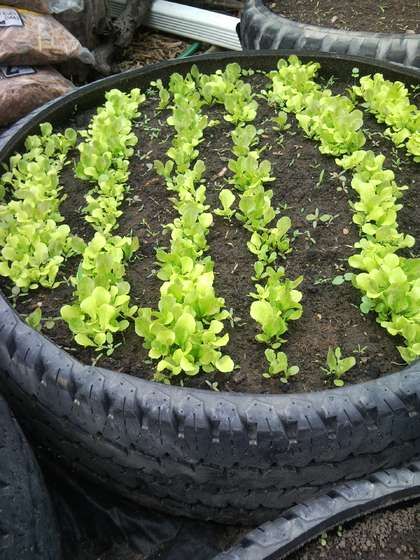
    • Tires
    •  Steel Tubs
    •  Trash cans/buckets/Plastic Containers
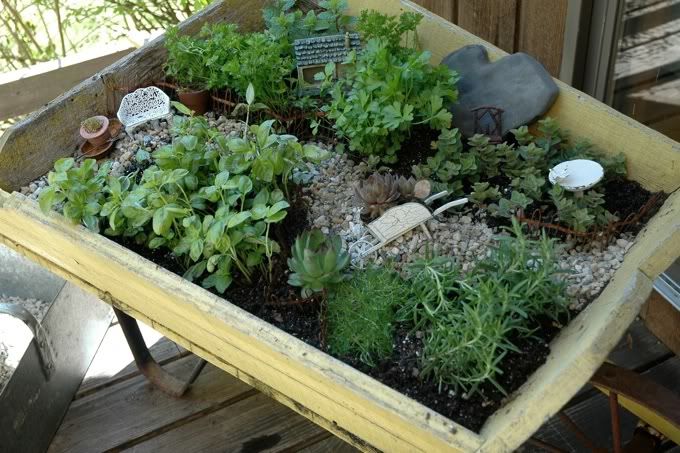
    •  Wagon/Wheel barrel
    •  Aquarium/Glass windows for cold-frame raised beds
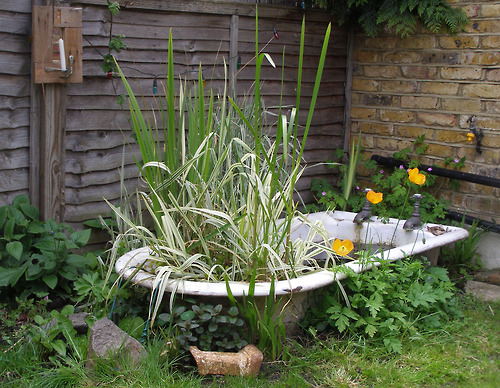
    •  Ceramic structures (toilets, sinks, tub)

    My partner and I are constructing our raised beds out of plastic siding that we already had lying around. Below are pictures of the first raised bed/box garden my partner made, which was made up of boards from pallets.


    Watch the video below by John Koehler, discussing examples of Container Gardening, vertical gardening, and ways in which you grow food to conserve space:


    Wednesday, March 28, 2012

    How to escape from the pressures of society

    It is no wonder we want to escape from reality if we have to wake up at 6:30am and prepare to go to a job we hate, to pay off 'things' that we're told we have to have (i.e. vehicles, cable, cell phones, etc.) My post on how single mothers can live for free similarly answers the question 'how can we escape from society (or pressures)?'

    Vehicles and other transportation are one of the largest contributors directly associated with air pollution. Moreover, your food should be coming from your garden. We cannot keep depending on the reliance of vehicles for our convenience of imported food. Or else if we face some sort of collapse of oil, then we can say good-bye to Florida Oranges being shipped on a truck to Michigan; or California dates transported on a truck to New York. 
    Our dependence on the grocery store is directly related to our dependence on oil. 
    I admit I eat many imported foods but there is a reason why I am trying to grow as many fruit trees and fruit bushes and vegetable gardens. I would love to construct an in ground greenhouse for lemon, lime, mandarin, and banana trees. 

    Once again, find a way to grow your own food -- I have a blog post on how apartment dwellers can grow food (if you don't have garden space to do so) here: Three Ways to Grow Food & Other Plants for Apartment Dwellers (Indoors/Outdoors)
    Ask friends or family who own property, preferably more than 3 acres -- if you can build a garden or build a small house for you and/or your family. In return, you can give them your extra or leftover food you grew, in exchange for living on their land. 

    If you do not have family or friends that can allow you to do this, find a spot in the woods that is less traveled by human/animal, has shade and sun, and is close enough to human contact in an emergency. Tutorials on debris shelters for living in the woods go to
    Semi-Permanent Debris Shelters - Vegans Living Off the Land
    and Construct your own home.
    Screw anyone that tells you you have to own property! 
    I am growing food on my Mom's and grandparents' yard, and building my Earth home in my Grandparents' woods because I intend to live for free.

    I have mentioned our dependence on driving a vehicle, which leads me to my next tip: Reduce your use of other technologies like cell phones, washer, dryer, dish washer. These things are expensive and unnecessary in most cases. If you want to "escape" from the pressures of our society, you may want to remind yourself of what is most important. Once again, these machines are an unsustainable and finite resources (when coal cannot be used to power our luxuries.) However, technology is NOT the issue, it is powering these technologies and being obsessed with the technologies that are symbols of capitalism, greed, laziness, and sloth. Of all technologies, internet access is the best tool for teaching one another how to do things for FREE. It is one of the greatest Anarchist technologies.
    With that being said, I would invest in solar panels when you can afford to do so. Small Solar panels will power at least the use of a laptop or one light of your house. 


    If you plan to settle down (and own your own property): build your own house out of recycled materials (i.e. wood, straw, mud, and stone from the woods.) For more information on how to create a home using recycled materials, and innovative ways to construct your home for CHEAP, go here for inspiring videos: Kirstendirksen on youtube, also read The Hand-sculpted House for another approach to free and environmentally-conscience building.

    Escaping the pressures of society would be to live as the other animals using your evolved skills of construct large shelters and growing food. Keep in mind, Humans are the only animals that heats (cooks) their food, we have all of these (wonderful and convenient yet unsustainable) technologies. 
    It only makes sense to eat fresh, raw, ripe fruits and vegetables that you can grow in your climate. Forage for foods that grow in the wild.