Showing posts with label earth conscience. Show all posts

Monday, January 23, 2017

Scary truth about PLASTIC: The ocean is a plastic soup

The ocean is a plastic soup. Plastic is derived from synthetic materials, most commonly produced from petrochemicals, and we have become devastatingly dependent on this "material", and the environment is reaping this destruction. "In some cases, small amounts of those chemicals can remain trapped in the product unless suitable processing is employed. For example, the World Health Organization's International Agency for Research on Cancer (IARC) has recognized vinyl chloride, the precursor to PVC, as a human carcinogen" according to McRandle of "Plastic Water Bottles". National Geographic. BPA in plastic has been argued to be an estrogen-like endocrine disruptor that may leach into food (McRandle, 2004.) "The very chemical bonds that make them so durable tend to make them resistant to most natural processes of degradation."
In fact, what happens to a lot of plastic is that it drifts from landfills and populated areas into the water ways. The documentary Plastic Paradise: The Great Pacific Garbage Patch shows you footage of their own discovery of what plastic does from netting entangling coral reefs to pieces of plastic eaten by seabirds. In the documentary, the research states that often the people that use netting for fish will leave the net in the ocean. In one instance, one sperm whale found in California in 2008 died because it ingested 22.2 kilos of plastic in its lifetime. 

Because plastic is relatively low cost, "easy" to manufacture, versatile, and resistant to water, plastics are highly valued by people. According to Andrady of "Applications and societal benefits of plastics" says "packaging beverages in PET plastic rather than glass or metal is estimated to save 52% in transportation energy". While this may be the case, I am advocating for a an entire shift away from pre-packaged beverages and things altogether. Yes, that sounds like I do not want to buy anything at all, and that sounds very strange to people to imagine a world where things aren't wrapped or packaged, or that things wouldn't exist at all. That is the concern for people.

According to The World Counts, global plastic waste has created a gigantic “plastic soup” the size of Russia in the Pacific of up to 15 million square kilometers. In 10 years, this amount will double. This year alone, we will be producing 5 trillion plastic bags, equating to 160,000 every second. All of us are guilty of this plastic convenient bag. But for the last 6 years I have used cloth bags every time I go to the grocery store so I'm not using plastic grocery bags. Of course when there is an occasional plastic bag that ends up at the house, I use it for the bathroom trash (I may do a video or a post on what I do with plastic bags in the future.)


Even on my behalf, I have limited the amount of trash and waste I produce and throw away. For years I saved plastics and took them to the recycling place, but realized: this is only adding to the environmental degradation--it's fueling the fire, so to speak. I save cardboard boxes to burn later, I save glass bottles, and other things so I'm not throwing them away. I realize though that I'm surrounding myself in trash and waste as to avoid adding to it to be dumped elsewhere.

This is a consumer culture, thus it is a trash culture too. There are small and large scale solutions, and all we have to do is imagine we can do it because humans are very good at imagining the future and creating what we want to see. I believe that we can abolish the plastic industry and completely change the way we make everything. It is a matter of seeing the problem, because especially in the case of trash and waste, if someone picks up our trash to take it to a landfill, we are not aware of the devastation we are doing ourselves. We don't watch our trash get taken to a landfill and watch our own trash get tossed and parts move with the end, and things end up in the ocean. If we see the problem, we will want to fix it.
I have mentioned this before in several posts: that instead of logging trees and clear cutting forests for carbon materials like box, loose leaf paper, and many other things, we can use hemp or bamboo instead because they are low impact materials. This can be said for plastic as well, by replacing plastic with hemp fibers.
banthebottle.net

People think because bottled water exists, that somehow it's better than tap water (although I find that tap water tastes like bleach, I still drink it instead of bottled water.) But, more people are buying different beverages in plastic bottles, and of course when you give people so many options, they help these corporations get rich.
Once again, individual solutions are good, but there will need to be large scale change that requires corporations to refuse buying and using plastic while completely changing the way they package items. Or even better, these corporations realize that what they produce and sell is meaningless to life, adds to the trash and waste of the world, and realize that they only produce things to make money instead of creating everlasting change. Actually, the large corporations need to be held accountable for all the unhealthy food and beverage options and the waste that exists in the world--we cannot blame people for their own mindless gluttony because it's the rich that are exploiting that notion of people.
There are many micro and individual solutions, like Sweet, a company that takes travelers to destinations like Mexico, that they call 'gaycations' to clean up the environment and do many community service projects during their stay. I found that to be interesting and mindful, so I recommend watching the full video here for some inspiration.

Monday, February 10, 2014

Semi-Permanent Debris Shelters (Minimal Living or living in the woods)

I've become obsessed with videos on constructing debris shelters, survival shelters, and creative ways to build out of readily materials within a short amount of time.

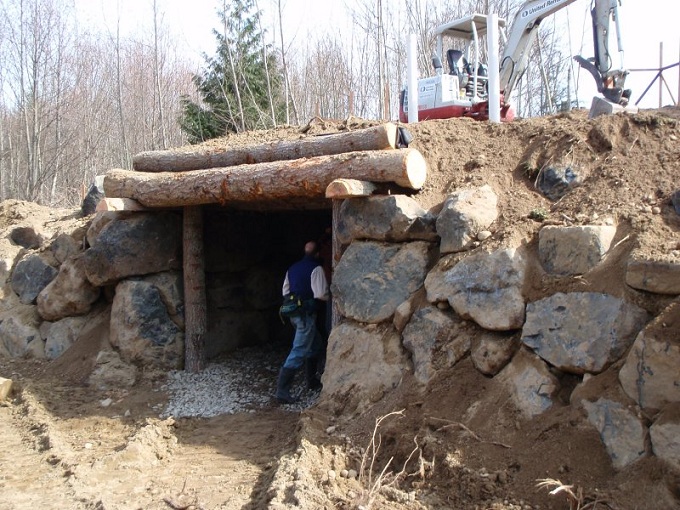
There are many types of emergency survival shelters such as Wikiups, wigwams, Tarp shelters, igloos, underground, and the list goes on. The most basic constructs are shelters formed with dead wood, then layered with an insulation such as twigs, sticks, leaves, mud, tree bark and so on.


A debris shelter allows you to form a fireplace and chimney attached.


 Below I will list some of the videos I think will help you build these shelters in a survival situation. These shelters can also be added to on a larger scale for semi-permanent to permanent dwellings.

Shelters like these are easier on our environment, they allow us to reconsider what is important in life: reading, breathing, meditating, walking. With this way of living, we let go of material, frivolous items, and spend more time in nature.

The list below consists of videos on the construction of debris huts, underground dwellings, and survival shelters. You can type in any search engine these keywords to look at more interesting pictures of these shelters. They key to learning how to build these shelters is by experience. Go outside to the nearest woods or your backyard and build you one of these shelters out of the readily available dead wood (and because it's winter, there will be plenty of leaves to use to act as insulation for your hut).

The video above "How To Build a Semi - Permanent Shelter (part 1)" which teaches you to build a debris shelter with a fireplace/chimney included, remember to watch part 2

In this video, Mike Douglas of Maine Primitive Skills School teaches you a step by step on how to pick a spot, what to use, and other information on debris shelters. Remember to watch part 2.

Here is a small tutorial on how to make a lean to natural shelter out of spruce limbs. The only tools are an axe and some twine. I do not advocate cutting down any live trees, only use dead wood.

Tuesday, December 18, 2012

COB BUILDING (Straw, clay, & Sand for building DREAM EARTH HOME)

Are you interested in a home made of materials from under your feet? Do you want a house that costs less than a car or a computer? Would you rather have a home sculpted from clean, Earth materials than a home made of toxic, commercial products? Of course you do!
Below I have posted some of my favorite videos from Youtube that talk about how to make INEXPENSIVE DREAM HOMES made of the cleanest materials (straw, clay, and sand.) These videos are to urge you to want to build a home of natural materials (rather than toxic plastic walls, fiberglass insulation, and other flammable products.) Homes made of clay (blended with straw/sand) are fire-resistant, bug-proof, earthquake and tornado-safe; and can be mended and shaped easily if it needs restructured. Clay is also abundant and common in most regions.

Saturday, May 26, 2012

Earth-friendly chick (Part II)

First I'll mention alternative cleaning products for your home, then skincare, cosmetics, and feminine hygiene. Instead of commercial sprays, detergents, bleaches, and other harsh waste to clean your clothes and your home, use baking soda, apple cider vinegar, washing soda, borax, and lemons for cleaning. These products are INEXPENSIVE, BIODEGRADABLE, SAFE TO TOUCH, ALL-NATURAL, and EFFECTIVE! Food sources and food bi-products (ACV, baking soda) are highly effective, safe for the environment, safe for you, cheap, and do not smell toxic.
Furthermore, shampoo, conditioner, hair-spray, the blow-dryer, nail polish, cosmetics are finite and unsustainable products that can only be made in a factory. Even "natural" products packaged in plastic must later be disposed of in the trash. 

Cleaning your home with safe products is usually a harder task than replacing your skin and hair care with food sources. For example, if you're looking for an exfoliate, moisturizer, cleanser, astringent, or calming mask, use food sources that have natural properties which helps clean your face, body, and hair.  I have listed below food sources that will provide specific benefits for your cosmetic and skincare needs.

Exfoliates for hair and skin are ground nuts, salt, sugar, and oats
Moisturizers for hair and skin are coconut oil, olive oil, avocado, aloe Vera and banana
Astringents (& taking off layers of dead skin) for skin are limes, lemons, oranges, grapefruit, persimmons, apple cider vinegar.
Calming agents for hair and skin are cucumber, oatmeal, nut milk.
Cooling agents for hair and skin are mint, spearmint, and aloe Vera
Tighten skin with butternut squash, zucchini, yellow squash, eggplant
Cleanser/Shampoo for hair and skin are castile soap or one part baking soda with two parts water. When using castile soap or baking on the hair, it needs to be followed with a rinse (which has replaced your conditioner). Rinses usually include one part apple cider vinegar to three parts water, or herbs. For example, if you are blonde, you should use chamomile or turmeric root (boiled and cooled); or if you are a brunette, use coffee, rosemary, thyme, sage, or black tea (boiled and cooled.) Use the boiled water to rinse your hair by straining the herbs and discarding them in your compost.

Actually, you can use food sources in place of your make-up. For instance, blush, lipstick, and eye shadow can be replaced with beet juice, freshly mashed cherries, and strawberries. You can use blueberries for mascara, as well. As far as hair, teeth, and clothes: water and baking soda are best replacements for the detergents on the market. To balance the properties of baking soda, use apple cider vinegar as a rinse or conditioner. Let your hair and clothes air dry after rinsing with water. If you have space in your yard, build a clothes line...ask your grandparents how to make one.You shouldn't have to use baking soda on your hair but 2-3 times a week. 

I have covered skincare, cosmetics, and the natural food sources you can use. Now I must express a great environmental concern on behalf of women: your menstrual cycle. I have mentioned several times before, including in this post Earth-friendly chick and this post Diva Cup product review after 7 years of use (VIDEO)
where I talk extensively about replacing the commercial, disposable, feminine products such as tampons, pads with cloth pads and silicone menstrual cups. These alternatives avoid adding more waste to the environment. I love using the diva cup because they last 10 years with proper care. And you can learn more about Diva cups in the link I posted with a video.

Saturday, May 5, 2012

Protein Myth Debunked ("Where do you get your protein!?")

"The story of protein is part science, part culture and a good dose of mythology" says Dr T Colin Campbell. In Campbell's book "The China Study" he states he worked in the Philippines to analyze foods contaminated with Aflatoxin (one of the most dangerous carcinogens), and also research who was most susceptible to the carcinogen. Campbell found that two areas in the Philippines, Manila and Cebu, had the highest rates of liver cancer due to the high levels of this carcinogen found in jarred peanut butter and corn. Manila consumed the most jarred peanut butter where Cebu consumed the most contaminated corn. Campbell goes on to note, "Namely,the children who got liver cancer were from the best-fed families. The families with the most money ate what we thought were the healthiest diets, the diets most like our own meaty American diets. They consumed more protein than anyone else in the country (high quality animal protein, at that), and yet they were the ones getting liver cancer!" (pg 36).
I really enjoyed an article "Why is plant protein better than animal protein" by OneGreenPlanet that outlined the Protein requirements, and how Protein deficiency is practically unheard of (unless you're anorexic). Not only that, but as mentioned above, the average American gets TOO much protein and fat in their diet which fuels heart and vascular issues, thyroid, mental fog, cancer/disease. 
Of course Freelee the Banana Girl always outlines her videos with a great message and information which you can watch in the video below:

For the sake of argument, vegans (at least myself) get triple the amount of protein every day or every other day than the recommended amount from calories (3% from calories.) The best sources of protein on a vegetarian and vegan diet are greens, beans, nuts, seeds, rice, oats, and wheat. All planted based sources of protein are LOW FAT, so there are lower risks of gaining of weight.

I would recommend you obtain your protein from fruits, vegetables, beans (boiled), and rice (boiled not fried.) Because nuts and seeds are high in fat, I do not eat them often (except for harvesting them off the tree during Fall and Winter month). 

It's true meat and eggs contain a high amount of protein -- but that's it! And this "precious Protein" in the form of Animal protein comes with a cost: leaching calcium from your bones to neutralize the acidity of these foods. 

Above all, and putting "nutrition" aside, does eating animal flesh and their secretions justify the slaughter and inhumane treatment of other beings? Veganism is an ethical decision with the health perks.

Wednesday, April 18, 2012

What's the best, free material to use for raised beds?

PALLETS

Pallets are accessible anywhere and everywhere for free. I would recommend using pallets to make your own house, compost bin, raised beds, or décor in your home. My partner found these pallets behind a country store; but you can find them behind any grocery store, big business and organization buildings (i.e. college campuses.) Pallets are all around us, it just takes some energy to go find them.

Monday, April 16, 2012

What you need to know about Compost (& doing it for free)

Compost is a crucial aspect in gardening because it is FREE, ORGANIC, HIGH QUALITY material, that fertilizes your soil so you can enforce nutrition and strength to your plants. According to "Why Composting is Important" from Environment.gov website, up to 30% of the material we add to the landfill is organic materials that could be composted at home (i.e. dust, paper, and food scraps) for gardening. In other words, YOU should be composting to reduce the amount of waste you're adding to landfills, while you could be using that compost to grow food, for free, for you and your family. Using your own compost to grow your OWN food is the healthiest thing you can do for yourself and your family.

Friday, April 13, 2012

Earth-friendly chick

Being conscience of our environment and researching how to protect it, is not just a man's job. Everyone should aim for creating a cleaner environment, which is why I wanted to mention one MAJOR way women can generate less waste, that is put into our landfills: getting rid of disposable tampons and pads.

Did you know, in 1998, 12 billion sanitary pads and 7 billion tampons were dumped on our earth in North America alone? Not to mention the 170,000 tampon applicators found at the U.S. coastal areas that same year.

If that statistic doesn't change your decision to switch to an alternative feminine hygiene product, then think of it this way: The average woman's menstruation span is between 11-52 (41 years), and when multiplying the number of pads/tampons you use each month by 12 (months in a year), then multiply that number by the average menstruation span, 41 years. For the sake of my readers, I'll do the math for you. Lets assume you use 4 tampons or pads per day for 5 days. That equates to 20 disposable tampons or pads per menstruation cycle. To reach the amount of disposable products used in a year, multiply 20 by 12: you use 240 tampons or pads each year. Now for the real shocker: multiply 240 by the average menstruation span of 41 years, which will give you close to 10,000 tampons or pads you'll use in your lifetime.

Not only are tampons and pads wasteful, most contain surfactants, adhesives, polyethylene plastic, dioxin, a carcinogen (by-product during the bleaching process of tampons containing rayon.) The chemicals put into the tampons and pads can leach out into your body...and your water when dumped in a landfill.

Would you like an alternative to tampons and pads, that are much safer for our environment and yourself? There are two options to completely eliminate the waste you add to landfills, such as the DivaCup and homemade cloth pads.

Source: Rowdy Kittens
The DivaCup is a silicone cup that catches your menstruation throughout the day (without having to take it out until you get home from work or school.) The DivaCup is used throughout the year for each period, and discarded when it is time to buy a new DivaCup. They cost approximately $24. Go to eBay to purchase them at a cheaper price than the DivaCup's website (you save money on shipping if not on the product itself.) Moreover, American women spend approximately $150-$200 a year on tampons and pads. By making the switch to the DivaCup, you're not only saving the environment and yourself from harmful waste products, you're also saving a significant amount of cash. Considering the DivaCup is scary to those who have NEVER heard of them, go to their website here (DivaCup) and find out more about the reasons for switching to the DivaCup and how you can make it happen.
Source: New Life on a Homestead
Secondly, cloth pads are another cost saving alternative to tampons and pads. Actually, you can make your own. Cloth pads are self-explanatory, as they are sheets of biodegradable cloth that absorb your flow. You can purchase five to use one pad, each day, while you machine wash your other pads. Cloth pads can be reused for as long as you take care of them. All that is required is washing the pads, and once they tear up, you can compost them. Here is a website that will take you to a collection of sellers that have made their own cloth pads to the public (at very cheap): Etsy, "Cloth Pads"
But if you prefer to make your own (because you're SO creative and you know how to work a sewing machine), then here is a website that will give you instructions on how to make your own, why you should use cloth pads to the alternatives, and other information regarding use: Tiny Birds Organic baby & family
Keep in mind, that eating a raw diet with emphasis on fruit will change your menstrual cycle. Some women have even said that they lose their period.
Many women have switched to using these eco-alternatives, and women have been using these products for over 50 years, so don't feel uneasy about using something new. If you have any questions and comments about using the DivaCup or cloth pads, leave a message below!

Wednesday, March 28, 2012

How to escape from the pressures of society

It is no wonder we want to escape from reality if we have to wake up at 6:30am and prepare to go to a job we hate, to pay off 'things' that we're told we have to have (i.e. vehicles, cable, cell phones, etc.) My post on how single mothers can live for free similarly answers the question 'how can we escape from society (or pressures)?'

Vehicles and other transportation are one of the largest contributors directly associated with air pollution. Moreover, your food should be coming from your garden. We cannot keep depending on the reliance of vehicles for our convenience of imported food. Or else if we face some sort of collapse of oil, then we can say good-bye to Florida Oranges being shipped on a truck to Michigan; or California dates transported on a truck to New York. 
Our dependence on the grocery store is directly related to our dependence on oil. 
I admit I eat many imported foods but there is a reason why I am trying to grow as many fruit trees and fruit bushes and vegetable gardens. I would love to construct an in ground greenhouse for lemon, lime, mandarin, and banana trees. 

Once again, find a way to grow your own food -- I have a blog post on how apartment dwellers can grow food (if you don't have garden space to do so) here: Three Ways to Grow Food & Other Plants for Apartment Dwellers (Indoors/Outdoors)
Ask friends or family who own property, preferably more than 3 acres -- if you can build a garden or build a small house for you and/or your family. In return, you can give them your extra or leftover food you grew, in exchange for living on their land. 

If you do not have family or friends that can allow you to do this, find a spot in the woods that is less traveled by human/animal, has shade and sun, and is close enough to human contact in an emergency. Tutorials on debris shelters for living in the woods go to
Semi-Permanent Debris Shelters - Vegans Living Off the Land
and Construct your own home.
Screw anyone that tells you you have to own property! 
I am growing food on my Mom's and grandparents' yard, and building my Earth home in my Grandparents' woods because I intend to live for free.

I have mentioned our dependence on driving a vehicle, which leads me to my next tip: Reduce your use of other technologies like cell phones, washer, dryer, dish washer. These things are expensive and unnecessary in most cases. If you want to "escape" from the pressures of our society, you may want to remind yourself of what is most important. Once again, these machines are an unsustainable and finite resources (when coal cannot be used to power our luxuries.) However, technology is NOT the issue, it is powering these technologies and being obsessed with the technologies that are symbols of capitalism, greed, laziness, and sloth. Of all technologies, internet access is the best tool for teaching one another how to do things for FREE. It is one of the greatest Anarchist technologies.
With that being said, I would invest in solar panels when you can afford to do so. Small Solar panels will power at least the use of a laptop or one light of your house. 


If you plan to settle down (and own your own property): build your own house out of recycled materials (i.e. wood, straw, mud, and stone from the woods.) For more information on how to create a home using recycled materials, and innovative ways to construct your home for CHEAP, go here for inspiring videos: Kirstendirksen on youtube, also read The Hand-sculpted House for another approach to free and environmentally-conscience building.

Escaping the pressures of society would be to live as the other animals using your evolved skills of construct large shelters and growing food. Keep in mind, Humans are the only animals that heats (cooks) their food, we have all of these (wonderful and convenient yet unsustainable) technologies. 
It only makes sense to eat fresh, raw, ripe fruits and vegetables that you can grow in your climate. Forage for foods that grow in the wild.