Showing posts with label all natural cleaning supplies. Show all posts

Sunday, June 10, 2018

Picking blueberries & squash, hoeing garden, making sugar scrubs today

Turning blue and will be ready to pick

Ready to pick but I'll wait so I can harvest a couple more to eat

Blue boa Agastache 


Watermelon

Watermelon patch

Cilantro and flowering arugula

Sweet potato vine seems to be bug resistant unlike the other potatoes 

Big tomato plants 

Grandpa still throwing out scraps to fertilize squash & corn 


Kennebac variety potatoes flowering soon

Hoed around the beans today 

Hoed and weeded around the beans 

Half the potatoes are growing in bags and the others in the ground

Grandma's garden table 

Made sugar scrubs today too with coconut & rose oil, vitamin E

Monday, February 10, 2014

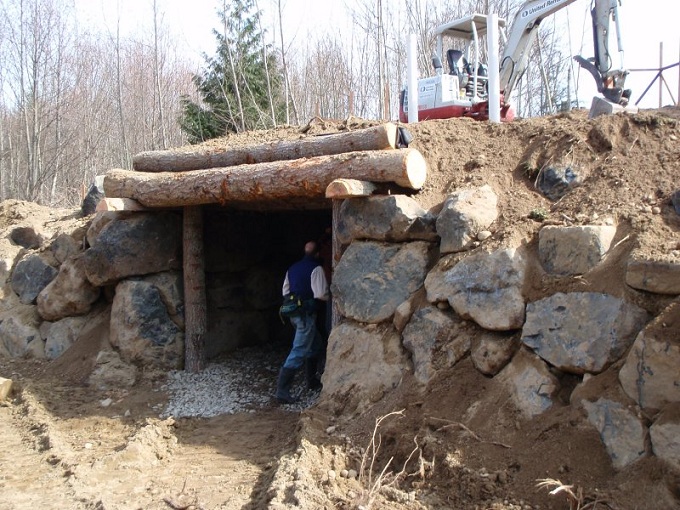
Semi-Permanent Debris Shelters (Minimal Living or living in the woods)

I've become obsessed with videos on constructing debris shelters, survival shelters, and creative ways to build out of readily materials within a short amount of time.

There are many types of emergency survival shelters such as Wikiups, wigwams, Tarp shelters, igloos, underground, and the list goes on. The most basic constructs are shelters formed with dead wood, then layered with an insulation such as twigs, sticks, leaves, mud, tree bark and so on.


A debris shelter allows you to form a fireplace and chimney attached.


 Below I will list some of the videos I think will help you build these shelters in a survival situation. These shelters can also be added to on a larger scale for semi-permanent to permanent dwellings.

Shelters like these are easier on our environment, they allow us to reconsider what is important in life: reading, breathing, meditating, walking. With this way of living, we let go of material, frivolous items, and spend more time in nature.

The list below consists of videos on the construction of debris huts, underground dwellings, and survival shelters. You can type in any search engine these keywords to look at more interesting pictures of these shelters. They key to learning how to build these shelters is by experience. Go outside to the nearest woods or your backyard and build you one of these shelters out of the readily available dead wood (and because it's winter, there will be plenty of leaves to use to act as insulation for your hut).

The video above "How To Build a Semi - Permanent Shelter (part 1)" which teaches you to build a debris shelter with a fireplace/chimney included, remember to watch part 2

In this video, Mike Douglas of Maine Primitive Skills School teaches you a step by step on how to pick a spot, what to use, and other information on debris shelters. Remember to watch part 2.

Here is a small tutorial on how to make a lean to natural shelter out of spruce limbs. The only tools are an axe and some twine. I do not advocate cutting down any live trees, only use dead wood.

Friday, January 10, 2014

Extreme environmentalism


Henry D Thoreau from Walden says, "I went to the woods because I wished to live deliberately, to front only the essential facts of life.." I live my life by these respects. I will work hard for my own to build shelter, and grow my own food-- other than these basic essentials, why would I need anything else?
I can better spend my time in the woods, exploring, and living for free.
Naturalism similarly suggests conserving energy, recycling, reducing waste, and other clean practices. Yet animals do not recycle or commit to clean practices because that's simply their nature. People have invented microwaves to heat food and television for entertainment.
"Men have become the tools of their tools" is an accurate portrayal on the disillusionment within our society.
What are some of the practices of wild animals? Animals eat a raw diet (whether they're herbivore or carnivore). Animals build their own shelter out of readily materials-- using their own strength (without machinery); own no clothing or use hygiene products; and Obviously the list goes on.

Minimalism is included in the practices of naturalism and environmentalism. Minimalism suggests letting go of unnecessary objects/possessions in your life. 'Letting go' has been a mantra in Buddhism and many other philosophies. Herman Hesse writes in Siddhartha "Property, possessions and riches...had become  chain and a burden".
Once you have become free of many of your possessions, or all, you feel free to move-- as if you've lifted the weight of your belongings off of your shoulders.
Focusing on our most basic needs and living independently from bills and corporations, will force you to grow your own food; build your house out of mud/straw/sand/rocks; filter water you have collected to drink; eat raw herbivore diet; wash your clothes minimally and do not own much clothing...or much of anything.
The  idea is to conserve finite resources and minimalize on space. Animals are usually nomadic creatures, and do not carry 'things' with them. Although the couple in the picture below are practicing minimalism, they are not practicing all natural living, which is fine if they want to live in a city with air pollution and commercialism.


this is NOT an example of natural minimalism
Another topic I will bring up (at a later date) is my refusal to drive vehicles. Not only are vehicles unsafe, but they're environmentally unstable unless we can ALL design our own water vehicles, or make our own moonshine for fuel. Then again, water may be a scarce source in the future.
I prefer to walk where I need to go, usually walking 1-4 miles a day. If I'm going to a friend's house, they'll give me a lift for courtesy.
Going back to water shortage, my grandparents and my partner and I shower minimally, once every two weeks, or use wash rags for face and privates. Using these practices will help me in the future when I will be living outside. I have many other ways I conserve water in this post, "How to Save/Recycle/Conserve Water".
Generally, if you live in a city you can also recycle glass and plastic for a little bit of cash.
My family drinks soda, so I have them save the cans to recycle (and I collect some along the road as I walk)-- I do this to make a couple of dollars too.
My grandparents even practice extreme environmentalism; recycling all plastics, cans, containers, and cardboard/paper. When I mention recycling, I do mean you should recycle or reuse objects you come to possess, but I also mean limiting your purchases. If buying food from a store, buy food in bulk (which comes in boxes), or use cloth bags. Purchase less stuff and eat food that can be composted.

Furthermore, do your part to clean up your environment, not just inside your home. Humans have the advantage because we are evolved animals who must take the responsibility to balance the use of technology with nature and wildlife.


pic from "Circle of Iron" with David Carradine
We can choose to use solar panels for electricity, and learn many homesteading techniques to live freely. We can grow our own food. We can build our own home. We can walk our own path.

Monday, July 16, 2012

Basic Skin and Hair Needs & the Foods that Work

pic source
It's not unlikely that a woman would use three different skincare products, then follow this regimen up with three different makeup products like I was doing. I remember using lots of facial products to prevent acne, and lots of makeup to cover it up. I am glad I realized I needed to heal within the body, at the source, rather than treating the symptoms.
From 2009 to 2011, I was smoking and drinking heavily, consequently my face broke out severely in 2011. During this time I was stressed from school. The combination of stress, lack of sleep, alcohol, and cigarettes affected my hormones. Once I made the connection that these stressors elevated my hormones and promoted the cystic acne, I immediately stopped smoking cigarettes, drinking alcohol, and began eating green juices, green smoothies, fruit smoothies, raw vegetables, raw salads. Within a couple of months, my family noticed a drastic difference in my face.
Now, I use zero foundation on my face. I wash my face with only water, and maybe use some of the foods listed below. I usually have one break out right before my period, but I combat that with aloe. Of course I grow several aloe plants, so I always have aloe around to use. Fruit and plants for facial care is an overall healthy, effective, and natural alternative to commercial skincare products, and they are also inexpensive. For example, fruit and plants naturally provide nutrients and moisturizes the skin. Coconut oil can be applied on the face, body, and hair as a moisturizer. Another example, sea salt can be an exfoliate for the face.
Many of these plants and fruits can provide a specific skin or hair need. I do not mention it below, but I especially like using tomatoes on the face. Below I have listed many different foods that take care of specific skin and hair needs:

Cleanser: baking soda, oranges, lemons, limes, tomatoes, apples, onions and garlic (sounds weird to use on the face, but they contain antibacterial/antibiotic properties), strawberries, ALOE VERA
Toner: Apple cider vinegar, cucumber or celery juice
Exfoliate: Sea salt, sugar, cornmeal, oats, ground nuts, wheat germ, ground flax seeds
Calming/cooling: mint, oats, Aloe Vera, almond milk
Tighten skin: pineapple, persimmon, squashes, banana peel
Lighten dark spots: Lemon or pineapple
Moisturizer: Oil (coconut, olive, walnut, etc), avocados, Aloe Vera, bananas
Toothpaste recipe: 2 tsp baking soda, 1 tsp cinnamon, 2 tsp water made into a paste and applied to teeth (credit: Eco Beauty by Cox & Cox


Your skin needs Vitamins A, C, E, B vitamins, and Selenium. Foods rich in Vitamin A are carrots, sweet potatoes, butternut squash, Swiss Chard. Those rich in Vitamin C are citrus fruits and tropical fruits. Get your B vitamins through Bananas. Get vitamin E through nuts and seeds. Your skin needs vitamin D as well, so be sure to catch some sun rays throughout the week outdoors. Overall, I recommend eating a fruit dominate diet with vegetables, tender leafy greens, and some grains, beans, nuts, seeds. If a food is good for you to eat, it is probably good for your skin too. 

Saturday, May 26, 2012

Earth-friendly chick (Part II)

First I'll mention alternative cleaning products for your home, then skincare, cosmetics, and feminine hygiene. Instead of commercial sprays, detergents, bleaches, and other harsh waste to clean your clothes and your home, use baking soda, apple cider vinegar, washing soda, borax, and lemons for cleaning. These products are INEXPENSIVE, BIODEGRADABLE, SAFE TO TOUCH, ALL-NATURAL, and EFFECTIVE! Food sources and food bi-products (ACV, baking soda) are highly effective, safe for the environment, safe for you, cheap, and do not smell toxic.
Furthermore, shampoo, conditioner, hair-spray, the blow-dryer, nail polish, cosmetics are finite and unsustainable products that can only be made in a factory. Even "natural" products packaged in plastic must later be disposed of in the trash. 

Cleaning your home with safe products is usually a harder task than replacing your skin and hair care with food sources. For example, if you're looking for an exfoliate, moisturizer, cleanser, astringent, or calming mask, use food sources that have natural properties which helps clean your face, body, and hair.  I have listed below food sources that will provide specific benefits for your cosmetic and skincare needs.

Exfoliates for hair and skin are ground nuts, salt, sugar, and oats. 
Moisturizers for hair and skin are coconut oil, olive oil, avocado, aloe Vera and banana. 
Astringents (& taking off layers of dead skin) for skin are limes, lemons, oranges, grapefruit, persimmons, apple cider vinegar.
Calming agents for hair and skin are cucumber, oatmeal, nut milk.
Cooling agents for hair and skin are mint, spearmint, and aloe Vera. 
Tighten skin with butternut squash, zucchini, yellow squash, eggplant. 
Cleanser/Shampoo for hair and skin are castile soap or one part baking soda with two parts water. When using castile soap or baking on the hair, it needs to be followed with a rinse (which has replaced your conditioner). Rinses usually include one part apple cider vinegar to three parts water, or herbs. For example, if you are blonde, you should use chamomile or turmeric root (boiled and cooled); or if you are a brunette, use coffee, rosemary, thyme, sage, or black tea (boiled and cooled.) Use the boiled water to rinse your hair by straining the herbs and discarding them in your compost.

Actually, you can use food sources in place of your make-up. For instance, blush, lipstick, and eye shadow can be replaced with beet juice, freshly mashed cherries, and strawberries. You can use blueberries for mascara, as well. As far as hair, teeth, and clothes: water and baking soda are best replacements for the detergents on the market. To balance the properties of baking soda, use apple cider vinegar as a rinse or conditioner. Let your hair and clothes air dry after rinsing with water. If you have space in your yard, build a clothes line...ask your grandparents how to make one.You shouldn't have to use baking soda on your hair but 2-3 times a week. 

I have covered skincare, cosmetics, and the natural food sources you can use. Now I must express a great environmental concern on behalf of women: your menstrual cycle. I have mentioned several times before, including in this post Earth-friendly chick and this post Diva Cup product review after 7 years of use (VIDEO)
where I talk extensively about replacing the commercial, disposable, feminine products such as tampons, pads with cloth pads and silicone menstrual cups. These alternatives avoid adding more waste to the environment. I love using the diva cup because they last 10 years with proper care. And you can learn more about Diva cups in the link I posted with a video.