Showing posts with label building your own home. Show all posts
Showing posts with label building your own home. Show all posts
Wednesday, February 22, 2017

Wednesday, March 11, 2015
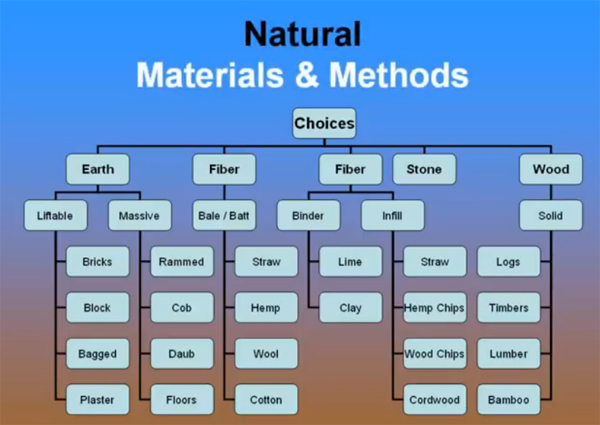
Types of Natural Materials & Methods for building Free/cheap HOMES
 |
| Natural building blog |
The lumber industry is another cruel industry that rapes forests, so I'm not comfortable with having someone kill a living tree for me. Instead I would build a small scale home that requires no logs. If wood is mandatory I will find dead and dried logs from the woods. Unlike trees, bamboo and hemp grow quickly to be utilized for mass production. Bamboo could be used for framing, doors, and flooring.
I highly recommend using all natural materials like mud, straw, and sand for the majority of your home (walls & flooring). When you're making your cob and stacking the cob to the walls, you want to save as much material as possible. Then using other materials like recycled glass bottles allows you to use less of your materials. Use recycled materials you have on hand such as glass bottles, tires, rebar, and more.
By reducing the amount of trash we produce, and reusing the trash that already exists will allow us to clean up our environment.
Tuesday, September 30, 2014
Monday, February 10, 2014
Semi-Permanent Debris Shelters (Minimal Living or living in the woods)

There are many types of emergency survival shelters such as Wikiups, wigwams, Tarp shelters, igloos, underground, and the list goes on. The most basic constructs are shelters formed with dead wood, then layered with an insulation such as twigs, sticks, leaves, mud, tree bark and so on.
A debris shelter allows you to form a fireplace and chimney attached.

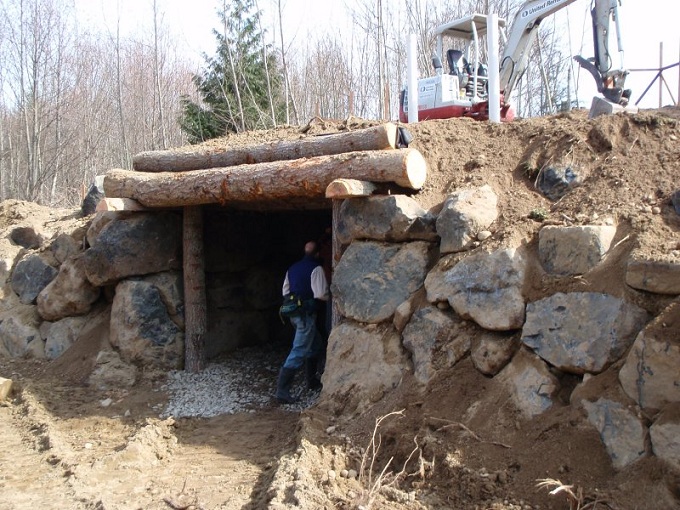 |
Below I will list some of the videos I think will help you build these shelters in a survival situation. These shelters can also be added to on a larger scale for semi-permanent to permanent dwellings.
Shelters like these are easier on our environment, they allow us to reconsider what is important in life: reading, breathing, meditating, walking. With this way of living, we let go of material, frivolous items, and spend more time in nature.
The list below consists of videos on the construction of debris huts, underground dwellings, and survival shelters. You can type in any search engine these keywords to look at more interesting pictures of these shelters. They key to learning how to build these shelters is by experience. Go outside to the nearest woods or your backyard and build you one of these shelters out of the readily available dead wood (and because it's winter, there will be plenty of leaves to use to act as insulation for your hut).
The video above "How To Build a Semi - Permanent Shelter (part 1)" which teaches you to build a debris shelter with a fireplace/chimney included, remember to watch part 2
In this video, Mike Douglas of Maine Primitive Skills School teaches you a step by step on how to pick a spot, what to use, and other information on debris shelters. Remember to watch part 2.
Here is a small tutorial on how to make a lean to natural shelter out of spruce limbs. The only tools are an axe and some twine. I do not advocate cutting down any live trees, only use dead wood.
Shelters like these are easier on our environment, they allow us to reconsider what is important in life: reading, breathing, meditating, walking. With this way of living, we let go of material, frivolous items, and spend more time in nature.
The list below consists of videos on the construction of debris huts, underground dwellings, and survival shelters. You can type in any search engine these keywords to look at more interesting pictures of these shelters. They key to learning how to build these shelters is by experience. Go outside to the nearest woods or your backyard and build you one of these shelters out of the readily available dead wood (and because it's winter, there will be plenty of leaves to use to act as insulation for your hut).
I have more posts on this subject with pictures of other structures which you can view here "Extreme Environmentalism", "Constructing your own home: cob building, homesteading, & free materials", "Cob building: straw, clay, & sand for building dream Earth home"
Friday, January 10, 2014
Extreme environmentalism
Henry D Thoreau from Walden says, "I went to the woods because I wished to live deliberately, to front only the essential facts of life.." I live my life by these respects. I will work hard for my own to build shelter, and grow my own food-- other than these basic essentials, why would I need anything else?
I can better spend my time in the woods, exploring, and living for free.
Naturalism similarly suggests conserving energy, recycling, reducing waste, and other clean practices. Yet animals do not recycle or commit to clean practices because that's simply their nature. People have invented microwaves to heat food and television for entertainment.
"Men have become the tools of their tools" is an accurate portrayal on the disillusionment within our society.
What are some of the practices of wild animals? Animals eat a raw diet (whether they're herbivore or carnivore). Animals build their own shelter out of readily materials-- using their own strength (without machinery); own no clothing or use hygiene products; and Obviously the list goes on.
Minimalism is included in the practices of naturalism and environmentalism. Minimalism suggests letting go of unnecessary objects/possessions in your life. 'Letting go' has been a mantra in Buddhism and many other philosophies. Herman Hesse writes in Siddhartha "Property, possessions and riches...had become chain and a burden".
Once you have become free of many of your possessions, or all, you feel free to move-- as if you've lifted the weight of your belongings off of your shoulders.
Focusing on our most basic needs and living independently from bills and corporations, will force you to grow your own food; build your house out of mud/straw/sand/rocks; filter water you have collected to drink; eat raw herbivore diet; wash your clothes minimally and do not own much clothing...or much of anything.

The idea is to conserve finite resources and minimalize on space. Animals are usually nomadic creatures, and do not carry 'things' with them. Although the couple in the picture below are practicing minimalism, they are not practicing all natural living, which is fine if they want to live in a city with air pollution and commercialism.
 |
| this is NOT an example of natural minimalism |
Another topic I will bring up (at a later date) is my refusal to drive vehicles. Not only are vehicles unsafe, but they're environmentally unstable unless we can ALL design our own water vehicles, or make our own moonshine for fuel. Then again, water may be a scarce source in the future.
I prefer to walk where I need to go, usually walking 1-4 miles a day. If I'm going to a friend's house, they'll give me a lift for courtesy.
Going back to water shortage, my grandparents and my partner and I shower minimally, once every two weeks, or use wash rags for face and privates. Using these practices will help me in the future when I will be living outside. I have many other ways I conserve water in this post, "How to Save/Recycle/Conserve Water".
Generally, if you live in a city you can also recycle glass and plastic for a little bit of cash.
My family drinks soda, so I have them save the cans to recycle (and I collect some along the road as I walk)-- I do this to make a couple of dollars too.
My grandparents even practice extreme environmentalism; recycling all plastics, cans, containers, and cardboard/paper. When I mention recycling, I do mean you should recycle or reuse objects you come to possess, but I also mean limiting your purchases. If buying food from a store, buy food in bulk (which comes in boxes), or use cloth bags. Purchase less stuff and eat food that can be composted.
Furthermore, do your part to clean up your environment, not just inside your home. Humans have the advantage because we are evolved animals who must take the responsibility to balance the use of technology with nature and wildlife.
We can choose to use solar panels for electricity, and learn many homesteading techniques to live freely. We can grow our own food. We can build our own home. We can walk our own path.
 |
| pic from "Circle of Iron" with David Carradine |
Thursday, November 21, 2013
Constructing our own home: cob building, homesteading, & free materials
Birds, squirrels, ants, and other species construct their own shelters out of readily available materials, like sticks, rope fiber, straw, mud, and other debris. Us, on the other hand, hire a team of workers to build our homes using drywall, wood panels, laminate flooring, paint, insulation, and other toxic and refined materials.
If you're fortunate you can build your own home; but like most of us we have to search for a vacant home at an affordable price. My mother bought home in the 90's for around $10K, and the house was built in the 1930s! It was always falling in and everything is always breaking, or pipes are freezing and breaking.
Unfortunately, even the simplest and decent of homes can cost up to $100,000. This could take ten or 20 years to pay off.
I don't want to spend my entire life going to school for training, then working over 20 years at an unfulfilling job...
We could learn from the animals, for example building our homes for free or little cost by constructing it ourselves using the same materials other animals use.

I believe we can and should build our homes out of non-toxic, free available materials, such as the wild animals do. 'cob', 'strawbale', 'earthbag', and earthship homes are examples of how we can use readily available materials efficiently and adapt to our needs.
If you're fortunate you can build your own home; but like most of us we have to search for a vacant home at an affordable price. My mother bought home in the 90's for around $10K, and the house was built in the 1930s! It was always falling in and everything is always breaking, or pipes are freezing and breaking.
Unfortunately, even the simplest and decent of homes can cost up to $100,000. This could take ten or 20 years to pay off.
I don't want to spend my entire life going to school for training, then working over 20 years at an unfulfilling job...
We could learn from the animals, for example building our homes for free or little cost by constructing it ourselves using the same materials other animals use.

I prefer the cob (straw, sand, and clay) method because I have these materials in abundance. The ground is clay, dried grass is straw and the creeks are full of sand. I intend to create a similar construction as this couple has done in the picture below. It requires no wood for frames; and instead the walls are built up with slabs of mud, straw, and sand until you have reached the desired height. Although this method seems unsteady, it is not-- because the materials mixed creates the consistency of concrete.
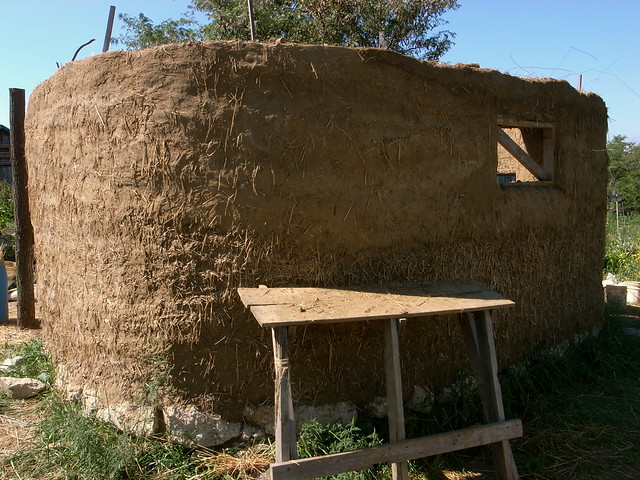
The couple that built the home (in the picture), took approximately 9 months to construct and several months to dry out.
For the step-by-step process (with pictures), go to their photo album here: "Year of Mud" The couple has several photo albums of their cob, and all natural building workshops as well as gardening photos on their Flikr page too.
For the step-by-step process (with pictures), go to their photo album here: "Year of Mud" The couple has several photo albums of their cob, and all natural building workshops as well as gardening photos on their Flikr page too.
For other references on building with cob, read "The Hand-sculpted house book" by Mike Smith, Ianto Evans, and Linda Smiley. Refer to Ianto Evan's and Leslie Jackson's book on heating your cob home: Rocket mass heaters.
My vision for a cob home would be somewhat of a nook. Perhaps as small as a normal sized kitchen! First the area will require leveling the ground, then digging a ditch in the outline of the shape of the home. It will be as small as a large shed, with one room to house dried herbs, books, some food, and a bed. I want a small frame that will allow us to save time on constructing the house while encouraging us to be outside instead of cooped up inside.
For those with no money or property, can experiment with building a debris shelter in the woods. In this case, you want to live absolutely free or temporarily in the woods, read a more recent post of mine "Semi-Permanent Debris Shelters (Minimal Living or living in the woods)" where I discuss how to build a shelter out of sticks and leaves. These debris shelters remind me of bird nests with more coverage.
 |
| bed made by monkeys |
I want to live in a world where everyone views their life simply: We get our basic needs met through Homesteading (food, water, shelter) which involves gardening, collecting free energy (sun and water), and building an all natural home. Live self reliant, independent, sustainable, and free as the animal you are.
Monday, January 7, 2013
What you need for homesteading (Full list of materials and supplies)
 There are many questions to homesteading, especially since independence is somewhat a frightening concept. Homesteading takes much time to learn the skills and techniques that surrounding gardening, building, and crafting. Perhaps it will take you five to 10 years to become a proficient gardener. Likewise, homesteading is the "old" and "new way" of living; because we can learn from our relatives how to build a home and grow food; but we can also learn from young folks how to coincide sustainably with nature, humans, and technology.
At length, homesteading requires much dedication, investment, creativity, frugality, and resources. But, where do you start? Do I start looking for land for sale? How much time can I invest in building my home? How much time can I invest in growing a garden?

All of those questions will be answered or have been answered throughout my blog; but I want to use this blog post to point out a FULL LIST OF MATERIALS you will need for homesteading. This list will assist you in estimating your budget/investment. By providing you a list of supplies you will need, this will give you the opportunity to think creatively: what materials can I make? What materials can I borrow? And, what materials do I have to buy? For example, a ladder does not have to be purchased; instead, you can build your own ladder out of free recycled wood (found at pallet shops, sawmills, or pallets behind grocery stores.)
If you see something I missed, please comment below, and I will add it!
A
Ash (compost)
Axe
Ash (compost)
Axe
B
Bamboo (posts, stakes)
Barrels (Rain)
Batteries
Battery Charger
Beams (wood posts)
Books (philosophy, instructional, garden, fiction)
Bottles (starting seeds indoors)
Bricks (rock, stone)
Brushes (painting, plastering)
Bamboo (posts, stakes)
Barrels (Rain)
Batteries
Battery Charger
Beams (wood posts)
Books (philosophy, instructional, garden, fiction)
Bottles (starting seeds indoors)
Bricks (rock, stone)
Brushes (painting, plastering)
Buckets (5 gallon)
C
Calculator
Canner (pressure cooker)
Carpenter's Level
Cart (wheelbarrow)
Cellar (cold storage)
Chains
Chainsaw
Calculator
Canner (pressure cooker)
Carpenter's Level
Cart (wheelbarrow)
Cellar (cold storage)
Chains
Chainsaw
Chairs (home)
Chalk line
Cheesecloth
Chicken wire
Clamshell digger (post hole)
Compost (organic)
CONTAINERS (unique gardening)
Cooler (food storing)
Crates (storage)
Cultivator (rototiller)
Chalk line
Cheesecloth
Chicken wire
Clamshell digger (post hole)
Compost (organic)
CONTAINERS (unique gardening)
Cooler (food storing)
Crates (storage)
Cultivator (rototiller)
D
DC>AC inverter (solar panels)
Decor (outdoor/garden)
Dehydrator
Door (home)
Drill (speed)
Drill bits
Drums (55-gallon)
Duct tape
DC>AC inverter (solar panels)
Decor (outdoor/garden)
Dehydrator
Door (home)
Drill (speed)
Drill bits
Drums (55-gallon)
Duct tape
E
F
Fencing (wire)
Fertilizer (organic)
Forks (garden)
Freezer (cooler, food storage)
Froe
Fertilizer (organic)
Forks (garden)
Freezer (cooler, food storage)
Froe
G
Galvanized screening (sifting)
Garden hose
Generator
Gloves
Goggles (safety)
Greenhouse(s)
Galvanized screening (sifting)
Garden hose
Generator
Gloves
Goggles (safety)
Greenhouse(s)
H
Hammer
Handkerchief (cleaning tools)
Hand saw
Hammer
Handkerchief (cleaning tools)
Hand saw
Hose (garden)
Hoe
I
INTERNET
J
Jars (Mason)
K
Knife (utility)
Knife (utility)
L
Ladder
Level (carpenters)
Ladder
Level (carpenters)
M
Machetes
Mallet (wooden)
Marker pencil
Machetes
Mallet (wooden)
Marker pencil
Mattock
Measuring tape
Mulch
Measuring tape
Mulch
N
Nails
Nails
O
Organic SOIL
Outdoor Decor
Oven (made from sand, clay, & straw)
Organic SOIL
Outdoor Decor
Oven (made from sand, clay, & straw)
P
Pallets (recycled wood for trellis)
Pencils (marker)
Pickax
Pinch bar
Pitchfork
Plants (vegetable plugs, flowers)
Plastic sheeting (black & Clear)
Pliers
Pocket knife
Poles (posts, beams)
Post hole digger
POSTS (beams)
Pots (Flower, vegetable, herbs)
Pressure Cooker (canner)
Pruning shears
Pulaski
Pallets (recycled wood for trellis)
Pencils (marker)
Pickax
Pinch bar
Pitchfork
Plants (vegetable plugs, flowers)
Plastic sheeting (black & Clear)
Pliers
Pocket knife
Poles (posts, beams)
Post hole digger
POSTS (beams)
Pots (Flower, vegetable, herbs)
Pressure Cooker (canner)
Pruning shears
Pulaski
Q
R
Rain barrels
Rake
Rock minerals (improving soil)
ROCKS (decor, building structures)
Rain barrels
Rake
Rock minerals (improving soil)
ROCKS (decor, building structures)
Rope
Roof structure (metal, shingles, lumber)
Root Cellar (cold storage)
Rototiller
Roof structure (metal, shingles, lumber)
Root Cellar (cold storage)
Rototiller
Ruler (yardstick)
S
Safety goggles
Sand (for garden & home material)
Saw (hand or chain)
Saw horses
Screens (galvanized)
Safety goggles
Sand (for garden & home material)
Saw (hand or chain)
Saw horses
Screens (galvanized)
Screwdriver
SEEDS (flower, herb, veggie, fruit)
Shears (pruning)
Sheets (plastic, tarp)
Shovel
SOIL (organic gardening)
Solar panels
SPACE (for gardening)
Spades (digging)
Sponge (finishing interior of home)
Stakes (posts or poles)
Step ladder
String (hemp, rope)
Swanson square
Shears (pruning)
Sheets (plastic, tarp)
Shovel
SOIL (organic gardening)
Solar panels
SPACE (for gardening)
Spades (digging)
Sponge (finishing interior of home)
Stakes (posts or poles)
Step ladder
String (hemp, rope)
Swanson square
T
Table (home)
TARP (plastic sheeting)
Tape measure
Table (home)
TARP (plastic sheeting)
Tape measure
Tiller (rototiller)
Tool box
Trays (starting seeds)
Trellises (Arbors)
Trays (starting seeds)
Trellises (Arbors)
U
Utility knife
Utility knife
V
W
Watering system
Watering system
Wheel barrel
Windows (home)
Wood mallet
Wood posts (beams for home)
Wood stove
Worms (compost)
Windows (home)
Wood mallet
Wood posts (beams for home)
Wood stove
Worms (compost)
X
Y
Yardstick (ruler)
Yardstick (ruler)
Z


Keep in mind, you may not need most of these items. In fact, you may not
need windows, doors, or tables because you do not plan on making a home
or shed.
Then again, if you are planning to build your own home, you may need MORE than what's listed above. A new home-owner needs silverware, kitchen appliances,
bed sheets, pillows, etc. If you want to build your own home -- keep in mind
that I have not listed exact building materials. Here is an idea of basic materials you may need for your home:
For the
foundation of the house you may need rocks, bricks, concrete, or gravel. For structure of home (cob walls), you will need clay soil, sandy soil or sand, water, and straw. For roofing, you'll need lumber, poles, boards, and windows. Of course, you'll need glass or windows, doors, hinges, knobs, etc.
Again, if I missed an important tool or material, please comment below and I will add it to the list.
How much money have you invested in homesteading, so far? I have the luxury of borrowing most of my Grandfather's tools and supplies, as well as the space to grow food and build a home. I'm very fortunate for this!
Again, if I missed an important tool or material, please comment below and I will add it to the list.
How much money have you invested in homesteading, so far? I have the luxury of borrowing most of my Grandfather's tools and supplies, as well as the space to grow food and build a home. I'm very fortunate for this!
Subscribe to:
Posts (Atom)