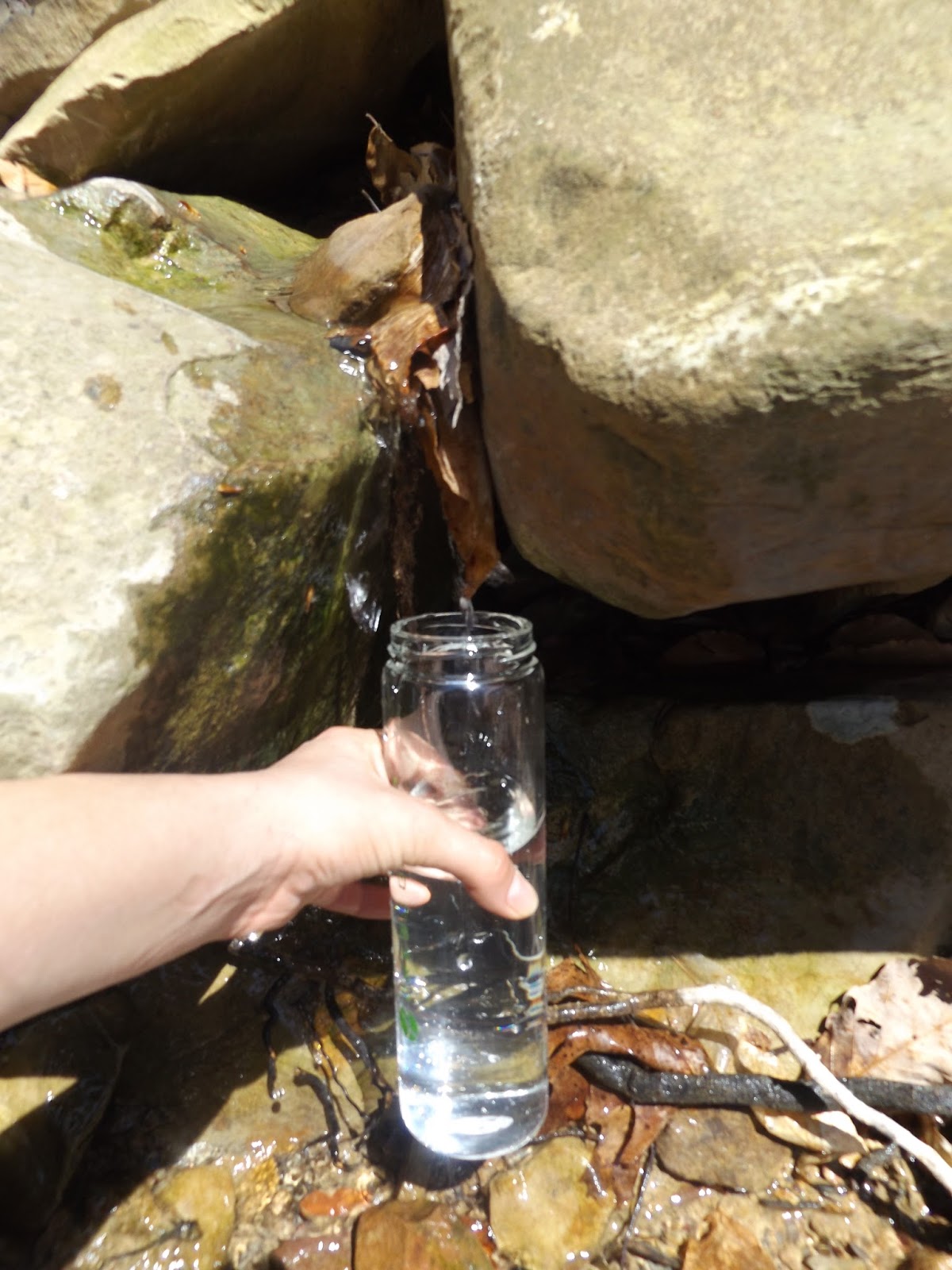
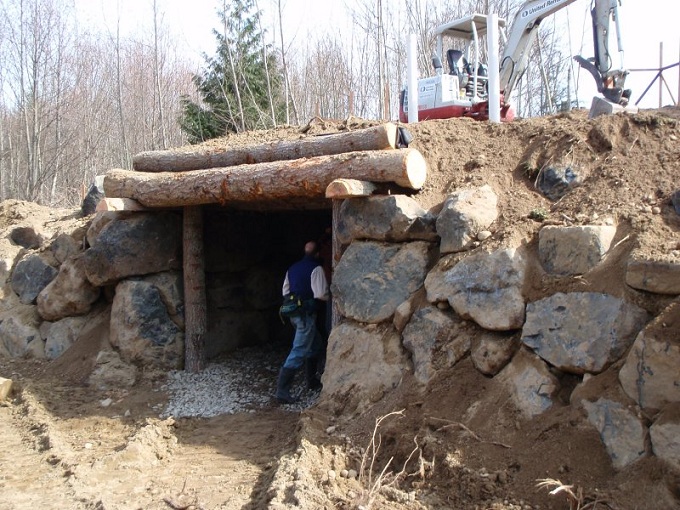
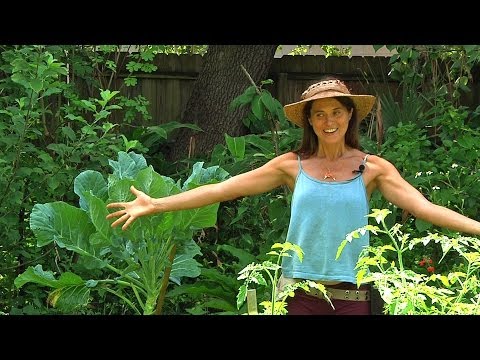
Once again I foraged for morel mushrooms this week for the third time and found nothing again despite hunting for three hours today. I took the dog to the same creek as I had a couple of days ago so she could bath and drink the water. When we came to the creek, I filled up my bottle and used the lifestraw to drink the creek water. My brother came along for exercise. As we hiked, we took lots of pictures which I have posted below. Dogwood, red bud, and paw paw trees were blooming and other flowers in the woods as well.
Showing posts with label escape pressures of society. Show all posts
Thursday, April 13, 2017
Tuesday, February 21, 2017
Re-wild yourself Part II: Hike in the woods naked
bed so I can mulch soon.
But also on days like this, I go into the woods to my sacred spot that I have dedicated to meditating and sunbathing. Here in the woods I re-wild myself when I take off my shirt, pants, briefs, and boots. My bum is bare to the smooth cold rock shaped perfectly like a bench. The tree above me has its roots wrapped around the rock where my feet are dangling and I'm rubbing my soles on the smooth bark of the Elm. A Hawk calls above me and circles the hillside. Other birds make cute little playful sounds like they're saying yes to the coming Spring. And I spread my body like the flowers emerging from the soil, stretch like the tree, arms out like the hawk, and the fungus growing.
In my previous post on Re-wilding yourself talked about eating wild edibles and some common wild edibles in the woods near you. So I wanted to share with you another way I re-wild myself often throughout the year. Because there is something pleasurably freeing being naked in the woods, I also suppose this experience makes me feel hat like I am reverting back to my animal. I feel that this practice is like therapy in that way.
I must say that it is a privilege to have access to woods, forest, trees, grass because in urban areas, it's an industrial waste site. And I'm even more privileged because I have woods behind my house. But, try this practice of hiking naked in the woods if you have woods near you, and document your feelings and reactions. There are many things you can add to your meditation practice like standing erect with your back against a tree and holding the base of the tree like you're giving a reverse hug and imagine and exchange of energy being transferred between you and the tree. I tried this today as well and I found it very comforting and healing. So experiment with those holistic practices as well as see if they work for you. Many people require some form of rejuvenating or healing period in their life--and some people call it a vacation--but I tend to create my own retreat when I go into the woods.
Sunday, January 15, 2017
BENEFITS OF NUDITY & SUN BATHING NUDE
| mrwallpaper.com |
1. The Sun Helps Clear Up Psoriasis: Those suffering from psoriasis are treated by dermatologists by having the patient sit under a fluorescent light, simulating the rays of the sun. Going nude does the exact same thing. It's free when sunlight is possible, it's natural, and a relaxing experience.
2. Sleeping Nude: Sleeping nude allows the air to travel freely over your entire body. Your body is therefore better able to distribute heat. As a result, you'll be cooler in the summer and warmer in the winter (under blankets, of course).
3. Nudism Helps Prevent Lyme Disease: Lyme disease is carried by a little bug called the deer-tick. Deer-ticks bite when they lodge themselves between your clothing and your skin. You can brush them off more easily before they find a place to bite if you are nude.
4. Skinny dipping can help reduce rash from sea lice: Sea lice, or jellyfish larvae stings cause a painful, itchy rash. The sea lice sting when they get trapped between your suit and skin. The obvious conclusion is to reduce your swimwear to reduce the chances of getting stung.
5. Fertility May Be Improved By Nudism: Going nude allows the male genitals to adapt better to changes in temperature. Clothing inhibits the natural mechanism of the body, especially if that clothing is tight and restrictive. This, in turn, may result in reduced fertility.
6. Alleviate Depression through increase of serotonin and endorphins from sun exposure. When your brain produces serotonin and endorphins your mood can be very helpful in alleviating depression.
7. Reduce Insomnia: Sunbathing can reduce insomnia. Your brain has an internal clock which is set when you are in the sun, as well as causing melatonin production, both of which help with sleep cycle.
8. Clear Your Skin/Even out skin tone: Skin irritations such as acne, rashes, eczema, and athlete’s foot can be cured by sun exposure. Not only does getting some sun clear your skin, it can also give you a healthy glow.
9. Balance Hormones: The sun can help regulate the production of hormones. Lying in the sun can often help decrease symptoms of PMS or menopause. Being in the sun also stimulates the pineal gland of the brain, regulating its secretions, which may allow for more creativity, insight, and mindfulness, as well as helping to improve your mood.
10. Break Down Toxins: Sunbathing can help your liver function, and assist in breaking down wastes and toxins in your body which may cause disease or cancer.
11. Increase Circulation: Exposure to the sun increases both white and red blood cell count and helps the blood circulate more efficiently.
12. Get your Vitamin D: And last but not least is the most well known benefit of sunshine: Vitamin D. Exposure of the skin to the sun’s rays is the best way to attain this essential nutrient. Vitamin D helps the body regulate the immune system, increase calcium absorption, which leads to strong bones, and avoid kidney stones, diabetes, and even obesity. D3 is also thought to improve cognitive functions and decrease the chances of developing Alzheimer’s disease.
In 1903, just over one hundred years ago, the Nobel Prize for Medicine was awarded to Niels Finsen, a Danish doctor who discovered that the sun's rays could cure tuberculosis, rickets and wounds.
Wednesday, May 11, 2016
Sociological model theory
No one is one-dimensional because all of our experiences and stories
are their own dimension (time, place, space.) Although we have been
programmed in some ways to obey, do as we're told, conform, brainwashed,
but through modernity we have expanded our freedoms. People make money
online, or have little shops to get by, and some make it rich if the
idea is crazy enough. But, this could also create a sense of
anomie--where there is too much freedom for some, and not enough freedom
for others.
Then this evokes the idea of inequality and the division within society, or even the conflict of society that drives change. We see that throughout history, our world is constructed of dialectical relationships, where there are opposites of the same side. There is a yin and yang quality of life, where opposites are complementary and interconnected in the natural world. We're interconnected in that we all have the same needs. For example, we all need affection, love, connection, integrity, well-being, but not everyone is the same in the ideas we project, or the projects we ideal...because we come from different standpoints.
Male and female are not opposite and sex is complementary! We play the role we were born into, and we are socialized to act, dress, talk, think a certain way thus like a self-fulfilling prophecy. We have a chance to change with the little time we have on Earth if we want to. In this short amount of time we have, there exists the concept of death, which we fear more than anything. We fear death of ourselves and others closest to us, so we create institutions around truth, justice, medicine, education, science, research, language, and everything else that encompasses the industrial, surveillanced, capitalistic arenas. At the end of the day, we were meant to die, because if you were born and so you will die. But this doesn't necessarily have to be a negative aspect, because you are part of the universe and peoples and animals and plant life before you that have lived and died. Our biologic value on this earth is to procreate and sustain life in our society and natural environment. It is our abstract life that we create symbolic meaning and value to things we cannot see or that we created like science, math, language, symbols of religion/philosophy, etc.
And this cycle repeats where there is conflict in our ideas within science, religion, philosophy, language, etc. But humans are unique that we seek the truth. We are an investigative species seeking the truth through the different standpoints we've been given. We can be fooled or foiled in the information we've been given, so we do our best to understand with which we have been equipped.
We are all made up of particles from the universe. We share the same elements as the plant and animal life, rock life, soil, and others in the atmosphere. We have been life for billions of years, and humans for hundreds of thousands of years giving feedback to one another and creating language to create other institutions of life, to search for the truth of who we really are and why we're here.
Then this evokes the idea of inequality and the division within society, or even the conflict of society that drives change. We see that throughout history, our world is constructed of dialectical relationships, where there are opposites of the same side. There is a yin and yang quality of life, where opposites are complementary and interconnected in the natural world. We're interconnected in that we all have the same needs. For example, we all need affection, love, connection, integrity, well-being, but not everyone is the same in the ideas we project, or the projects we ideal...because we come from different standpoints.
Male and female are not opposite and sex is complementary! We play the role we were born into, and we are socialized to act, dress, talk, think a certain way thus like a self-fulfilling prophecy. We have a chance to change with the little time we have on Earth if we want to. In this short amount of time we have, there exists the concept of death, which we fear more than anything. We fear death of ourselves and others closest to us, so we create institutions around truth, justice, medicine, education, science, research, language, and everything else that encompasses the industrial, surveillanced, capitalistic arenas. At the end of the day, we were meant to die, because if you were born and so you will die. But this doesn't necessarily have to be a negative aspect, because you are part of the universe and peoples and animals and plant life before you that have lived and died. Our biologic value on this earth is to procreate and sustain life in our society and natural environment. It is our abstract life that we create symbolic meaning and value to things we cannot see or that we created like science, math, language, symbols of religion/philosophy, etc.
And this cycle repeats where there is conflict in our ideas within science, religion, philosophy, language, etc. But humans are unique that we seek the truth. We are an investigative species seeking the truth through the different standpoints we've been given. We can be fooled or foiled in the information we've been given, so we do our best to understand with which we have been equipped.
We are all made up of particles from the universe. We share the same elements as the plant and animal life, rock life, soil, and others in the atmosphere. We have been life for billions of years, and humans for hundreds of thousands of years giving feedback to one another and creating language to create other institutions of life, to search for the truth of who we really are and why we're here.
Tuesday, May 5, 2015
Living in the Garden of Eden
If you're following the blog, you may have noticed in my latest post on Guerrilla gardening and seed bombing, I have recently become interested in this idea of growing food everywhere, and to feed everyone in need.
The Garden of Eden is an expression from the Bible. Mentioned in conjunction to the Garden of Eden, is that the Lord blessed us with all the trees and plants we needed to thrive. Of course, I'm not a religious person, but I like to think of this as a concept to your own backyard.
I am here to say I think it is possible to create this kind of world-- living in the garden of Eden-- where the Earth is entirely covered with plants, natural architecture, and sustainable technologies.
Many couples and communities have already created this vision. Paul Gautschi, a permaculture gardener, does in fact believe in god's garden of Eden--which influenced his decision to move from California to Washington, to grow an orchard and food forest in his backyard. He has an influential documentary titled Back to Eden (video), where he advises gardeners to sheet mulch their yard with compost and wood chips. Paul says that god told him to grow food by building the soil like the forest floor. In past posts I have shown videos of Paul Gautschi and his garden--and I recommend listening to him because he has great advice: Back to Eden Garden Tour & Fruit Orchard using Permaculture.
Some internet friends have relocated to Costa Rica, Hawaii, and Florida to grow tropical fruit. I have listed other homesteaders and gardeners in the links under "Sustainability & Gardening sites" (to the left of the page), like Terra frutis, Ardent Light, and Banana Sanctuary. Other internet friends have transformed their backyard into a food forest, for example my friend Victor, Carrie, Val & Eli, and John Kohler.
One could survive almost completely off food they grow on a 1/4 of an acre, even a 1/10 of an acre. Val Hermann, featured to the left, and her partner Eli are growing a condensed and thriving food forest on a 1/4 of an acre. I highly recommend videos of their garden, which I have posted here.
A big California suburban family is growing a food forest on a 1/10 of an acre of land. They are completely off the grid; and run their cars off of vegetable oil, eat only from their garden, and have solar panels. You can watch the video here for inspiration.
I'm not convinced there is an overpopulation problem where we cannot feed everyone. In fact few people of the world own and control the rest of the world's resources. Humans, specifically Americans, have single handedly deforested precious, sacred land for coal, gold and diamonds, palm oil, wood, plastic, oil, gas, factory farming, and the list goes on. Now animals and plants are endangered, threatening to be extinct. Water, soil, land and air is contaminated. With what little we have to share on this planet, you would think we would want to protect it, keep it clean, and cultivate more plants.
My partner and I are also working towards building a food forest. To do this, we build the soil like the forest floor. This process grows bigger, and more nutrient rich food that is resistant to diseases and pests. By mimicking the natural process of composting and sheet mulching, vegetables and fruit can be ethically grown, without killing animals, insects, microbes in the soil, without using unsustainable machines, petrol oil, and chemicals.
If the Earth's water covers 361,132,000 km2 and land covers the remaining 148,940,000 km2, water covers 71 percent and land covers 29 percent. With that 29 percent, people could be covering land with fruit trees, fruit bushes, flowers/herbs, and vegetable gardens to provide food for every person on this planet.
Lets make this happen, together~
Thursday, April 30, 2015
10 year Veganniversary / Fruitarianism, most ethical diet
It's almost May, and I didn't want to forget to mention that April marks my-so-called Veganniversary. Ten years ago this month, I had an epiphany: that all People and animals have the same needs, desires, and want their life protected. And I began to extend this ethical principle into my diet and lifestyle. I chose not to consume animals, and use, or wear any animal by-product. I stopped using shampoo, shaving cream, body wash that was tested on animals. Other things that changed in my life: I began using a Diva Cup instead of tampons and pads; bought clothes secondhand, stopped frequently shaving and showering. I translated a superficial idea of Veganism into my life for many years.
I realized that including the food I called ethical is certainly not always ethically grown. Commercial fruit and vegetable agriculture were grown using methods that harmed other beings as well. Vegan "foods" can be considered unethical when the farmers are required to spray pesticides among other things to kill the insects. Another practice of commercial agriculture is that the soils are tilled which kills frogs, snakes, worms, moles, microbes that live in the soil. The farmers and pickers are usually working under horrible conditions of hot temperatures, long hours, fast labor, all the while being underpaid when the grocery chains are getting paid outrageous profits for selling to customers cheaply.
How is the fruit and vegetables I eat considered ethical under those conditions? This led to my second epiphany three and half years ago. Literally when I was working a desk job as a secretary--I was researching how to grow food, how to build a house with earthen materials, using solar energy, and foraging. With the new knowledge, I could not go on living a normal life.
Shortly afterword, I quit my job to pursue a life of homesteading. At that time, I also quit going to college because I was studying a degree I was not interested in any longer. Also my whole college experience was like living two lives. I made sure to focus on school and research, but I made time to party, drink alcohol, smoke cigarettes, stay up late, rarely sleep, eat vegan junk food, and make unhealthy choices--which led to my quest for optimal health on the raw vegan diet.
As I am writing this, I understand that there are aspects of my life that continue to be part of the environmental problem. I still buy things wrapped in plastic (which I don't always recycle or re-purpose). I am not using solar energy at the moment, because that is an investment we have yet to make. I am not living in a cob home, and I am not using a composting toilet. I am not drinking water from a spring, and I am not eating solely from the food forest. And yet I continue to make steps towards this lifestyle which I desire to pursue.
It's true I could have kept a job to pay for essential homesteading items. Instead I have chosen to live a life without money (or little money). If I had money I could buy solar panels, and buy the straw bales and other materials for the cob home. And as it goes, I have chosen to work harder without getting money involved. We have chosen to live with little money, we are temporarily building a cob home next to my family and growing food on family property. Because of this, building and growing come with challenges, delays, and setbacks.
In my experience, most people prefer to spend a lot of money for less time and less effort put into a house, food, energy, etc. People would rather buy a home than build one, or people would rather buy food than grow it. I am the opposite. Instead of buying lumber for raised beds, I'll go to the woods to scavenge logs for raised beds-- which I haul and drag myself. That's my life. I prefer to spend all my time and effort on projects rather than making money to buy the lumber.
Of course I would love a trading system, exchanging trees, plants, seeds, and other things for ones I need. I have traded many things before without involving money. I could do many things if I had the money. In fact, in the last three and a half years of gardening, I could have bought a
hundred fruit trees; but I try not to think of it that way. I
try to think in terms of accomplishments instead of what we lack. I think, I can save the seed from fruits to grow and propagate in the future without buying a tree.
Of course you can check out the collection of fruit trees in our food forest in previous posts: Blooming Fruit trees in the food forest and Fruit trees & Fruit bushes we are currently growing (Garden update July 2014).
Ok, so I really went off on a tangent from Veganism to growing food to money to transcendentalism... What I mean to say is, I have come to see how we eat, how we make money, and how we live to be interconnected. And all people's choices affect other beings. By creating a food forest for myself and my family, I can ensure that we eat in times of shortage, depression, or economic collapse. The edible landscape I create could potentially feed a new generation of people. Humans have controlled and conquered all life from deforestation, slaying of animals, producing an abundance of waste. But Humans have the potential to create a brighter, healthier, and abundant Earth (something I mentioned in my last post: Beautify the world with guerrilla gardening, graffiti art & tips on seed bombing).
A true ethical lifestyle is one consisting of no waste or recycles supplies, and a diet consisting of Fruit that was foraged, and/or grown in our own backyard. This is the lifestyle I am searching for. I have deep connection to the woods, hunting fruit, climbing trees, being barefoot and naked, breathing fresh air, and surrounded by plants.
When you choose to be vegan, you question every facet of your life. We begin searching for the answers which are provided by nature...
I realized that including the food I called ethical is certainly not always ethically grown. Commercial fruit and vegetable agriculture were grown using methods that harmed other beings as well. Vegan "foods" can be considered unethical when the farmers are required to spray pesticides among other things to kill the insects. Another practice of commercial agriculture is that the soils are tilled which kills frogs, snakes, worms, moles, microbes that live in the soil. The farmers and pickers are usually working under horrible conditions of hot temperatures, long hours, fast labor, all the while being underpaid when the grocery chains are getting paid outrageous profits for selling to customers cheaply.
How is the fruit and vegetables I eat considered ethical under those conditions? This led to my second epiphany three and half years ago. Literally when I was working a desk job as a secretary--I was researching how to grow food, how to build a house with earthen materials, using solar energy, and foraging. With the new knowledge, I could not go on living a normal life.
Shortly afterword, I quit my job to pursue a life of homesteading. At that time, I also quit going to college because I was studying a degree I was not interested in any longer. Also my whole college experience was like living two lives. I made sure to focus on school and research, but I made time to party, drink alcohol, smoke cigarettes, stay up late, rarely sleep, eat vegan junk food, and make unhealthy choices--which led to my quest for optimal health on the raw vegan diet.
![]() |
| picture of me and a cabbage head I grew |
It's true I could have kept a job to pay for essential homesteading items. Instead I have chosen to live a life without money (or little money). If I had money I could buy solar panels, and buy the straw bales and other materials for the cob home. And as it goes, I have chosen to work harder without getting money involved. We have chosen to live with little money, we are temporarily building a cob home next to my family and growing food on family property. Because of this, building and growing come with challenges, delays, and setbacks.
In my experience, most people prefer to spend a lot of money for less time and less effort put into a house, food, energy, etc. People would rather buy a home than build one, or people would rather buy food than grow it. I am the opposite. Instead of buying lumber for raised beds, I'll go to the woods to scavenge logs for raised beds-- which I haul and drag myself. That's my life. I prefer to spend all my time and effort on projects rather than making money to buy the lumber.
| last years Spring garden, April 2014 |
Of course you can check out the collection of fruit trees in our food forest in previous posts: Blooming Fruit trees in the food forest and Fruit trees & Fruit bushes we are currently growing (Garden update July 2014).
Ok, so I really went off on a tangent from Veganism to growing food to money to transcendentalism... What I mean to say is, I have come to see how we eat, how we make money, and how we live to be interconnected. And all people's choices affect other beings. By creating a food forest for myself and my family, I can ensure that we eat in times of shortage, depression, or economic collapse. The edible landscape I create could potentially feed a new generation of people. Humans have controlled and conquered all life from deforestation, slaying of animals, producing an abundance of waste. But Humans have the potential to create a brighter, healthier, and abundant Earth (something I mentioned in my last post: Beautify the world with guerrilla gardening, graffiti art & tips on seed bombing).
![]() |
| typical box of groceries for me |
A true ethical lifestyle is one consisting of no waste or recycles supplies, and a diet consisting of Fruit that was foraged, and/or grown in our own backyard. This is the lifestyle I am searching for. I have deep connection to the woods, hunting fruit, climbing trees, being barefoot and naked, breathing fresh air, and surrounded by plants.
When you choose to be vegan, you question every facet of your life. We begin searching for the answers which are provided by nature...
Monday, February 10, 2014
Semi-Permanent Debris Shelters (Minimal Living or living in the woods)
I've become obsessed with videos on constructing debris shelters, survival shelters, and creative ways to build out of readily materials within a short amount of time.
There are many types of emergency survival shelters such as Wikiups, wigwams, Tarp shelters, igloos, underground, and the list goes on. The most basic constructs are shelters formed with dead wood, then layered with an insulation such as twigs, sticks, leaves, mud, tree bark and so on.
A debris shelter allows you to form a fireplace and chimney attached.
Below I will list some of the videos I think will help you build these shelters in a survival situation. These shelters can also be added to on a larger scale for semi-permanent to permanent dwellings.
Shelters like these are easier on our environment, they allow us to reconsider what is important in life: reading, breathing, meditating, walking. With this way of living, we let go of material, frivolous items, and spend more time in nature.
The list below consists of videos on the construction of debris huts, underground dwellings, and survival shelters. You can type in any search engine these keywords to look at more interesting pictures of these shelters. They key to learning how to build these shelters is by experience. Go outside to the nearest woods or your backyard and build you one of these shelters out of the readily available dead wood (and because it's winter, there will be plenty of leaves to use to act as insulation for your hut).
The video above "How To Build a Semi - Permanent Shelter (part 1)" which teaches you to build a debris shelter with a fireplace/chimney included, remember to watch part 2
In this video, Mike Douglas of Maine Primitive Skills School teaches you a step by step on how to pick a spot, what to use, and other information on debris shelters. Remember to watch part 2.
Here is a small tutorial on how to make a lean to natural shelter out of spruce limbs. The only tools are an axe and some twine. I do not advocate cutting down any live trees, only use dead wood.
Shelters like these are easier on our environment, they allow us to reconsider what is important in life: reading, breathing, meditating, walking. With this way of living, we let go of material, frivolous items, and spend more time in nature.
The list below consists of videos on the construction of debris huts, underground dwellings, and survival shelters. You can type in any search engine these keywords to look at more interesting pictures of these shelters. They key to learning how to build these shelters is by experience. Go outside to the nearest woods or your backyard and build you one of these shelters out of the readily available dead wood (and because it's winter, there will be plenty of leaves to use to act as insulation for your hut).
I have more posts on this subject with pictures of other structures which you can view here "Extreme Environmentalism", "Constructing your own home: cob building, homesteading, & free materials", "Cob building: straw, clay, & sand for building dream Earth home"
Saturday, June 2, 2012
How to Save the Planet
![]() |
| Source: FreshPeek House: Cob Houses |
What I have noticed in the conservation movement is that: most people think they're doing the planet a favor by using their cloth bags instead of the store's plastic bags, when they go shopping. Moreover, they would say they're saving the planet using energy saving light bulbs in place of conventional light bulbs. Although these are smart adjustments, you can only save the planet by making a full, lifestyle transformation. Cloth bags and energy saving light bulbs are not enough! You should be investing in solar panels, wind turbines, land for growing food and building your own home, and live independently from oil, coal, and the like.
To understand the consequences of our earth's climate change, and why we should encourage our government to switch from conventional energy to solar and wind energy, watch the documentary "Six Degrees Could Change the World" on youtube for free.
Subscribe to:
Posts (Atom)