Showing posts with label shade tolerant plants. Show all posts

Saturday, April 29, 2017

My little Jungle of Interesting plants & Fruit growing around the yard (photography)

Hosta plants around the yard


Yuccas


Irises


Burning bushes have been growing all over the yard to the point they are taking over parts.


Similar to the burnish bushes, these Autumn Olive plants seen below are growing quite invasive. Autumn Olives are growing everywhere now along roads and near creeks/run off areas. Fortunately, Autumn Olives produce fruit in the fall of the year. They will have awesome smelling flowers that attract all kinds of insects, particularly butterflies in the spring.


Wild flowers


Maiden pink flowers


Grapes


Fruit trees

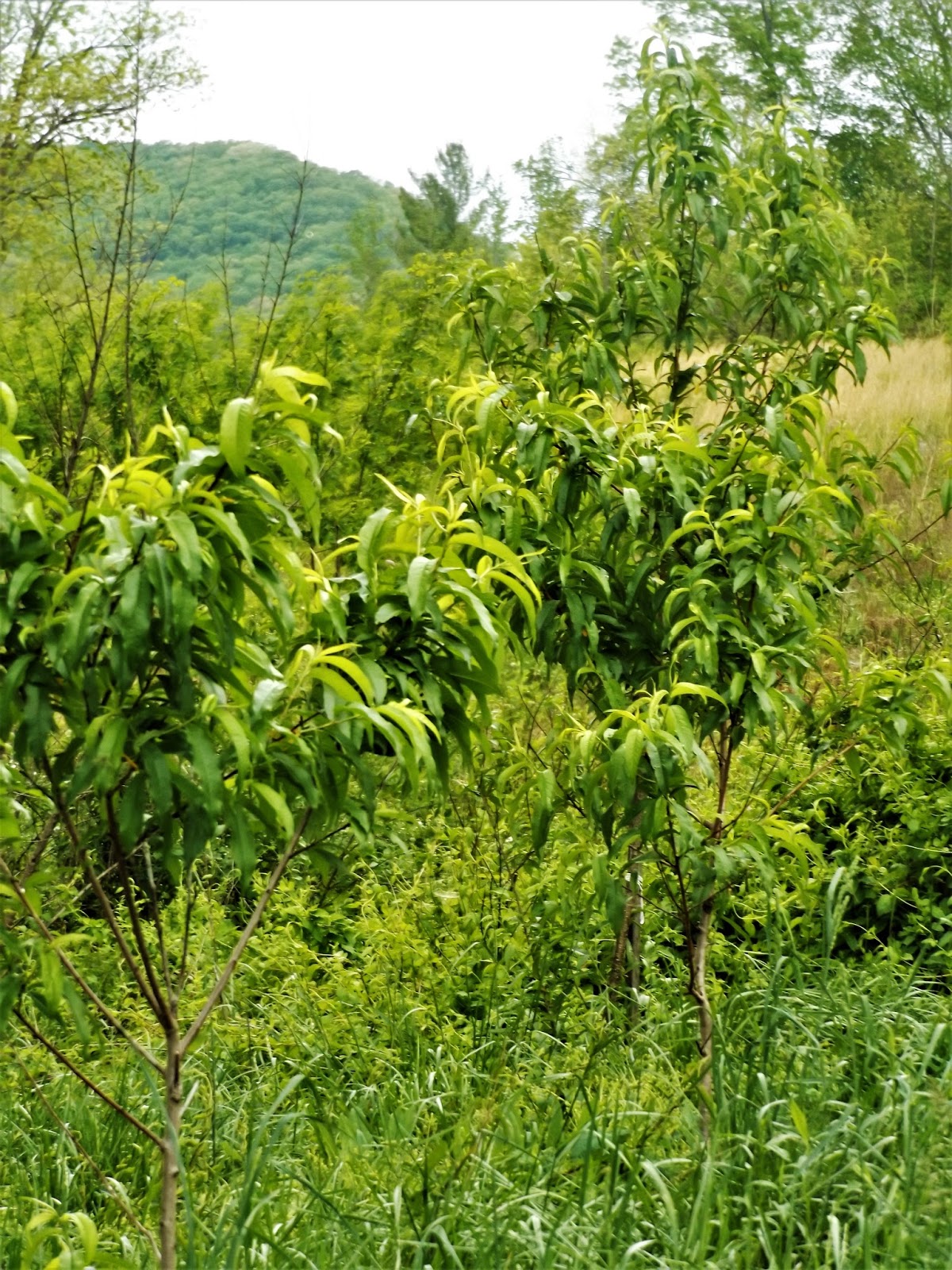
Peach tree

Peaches & Nectarines


Nectarine

Pears & Cherries

raspberries

raspberry patch
Mullein plant

Mint patch 


Blueberry harvest will be soon! With the older blueberry plants that I composted this year, I put chop sticks in the ground around them to keep the cats from digging into the compost to do their business.


chop sticks to keep the cats out
 This is just some of the plants growing around my yard.

Thursday, October 8, 2015

What low maintenance tropical houseplants to grow (VIDEO)

Months back I made a post on indoor houseplants, which you can see here: Transform your home into  a Rainforest Jungle (& list of tropical plants to grow indoors). I highly recommend viewing that post because there are some pictures of homes that have been transformed into a rain forest-like atmosphere, just by adding a couple houseplants. In that post I mentioned the three main household toxins of concern are benzene, formaldehyde, and trichloroethylene. These toxins can be removed by adding an abundance of house plants. 
The video below are low maintenance, low light, and beautiful plants that I grow indoors during the winter months. During the summer, I suggest keeping them outside. Oxygenate your house with these plants that also pull toxins to create a clean environment.

You see that I am growing Earth Peace Lily, Bromeliad, dracaena, Croton, Aloe Vera, Mother-in-law's tongue (Snake plant), and Christmas Cactus. Most of these plants can be watered as little as once per month. Other tropical plants I am growing are fruit trees such as avocado, pineapple, papaya, and tangerine seedlings.


Sunday, February 15, 2015

Transform your home into a Rainforest Jungle (& list of tropical plants to grow indoors)

Maybe you have a sunny room you can dedicate to growing food. If not, some corners of your home that get a little extra sun can be dedicated to shelves that will house trays or pots of vegetables and greens.

Parts of my living room, utility room, and bedroom that receive the most light are growing my house plants (Aloe Vera, Snake plant, Peace Lily, Christmas cactus). And I have a small greenhouse next to a window that is currently growing over 100 cabbage starters, which you can see in the post here: What I'm growing Indoors during February Winter.

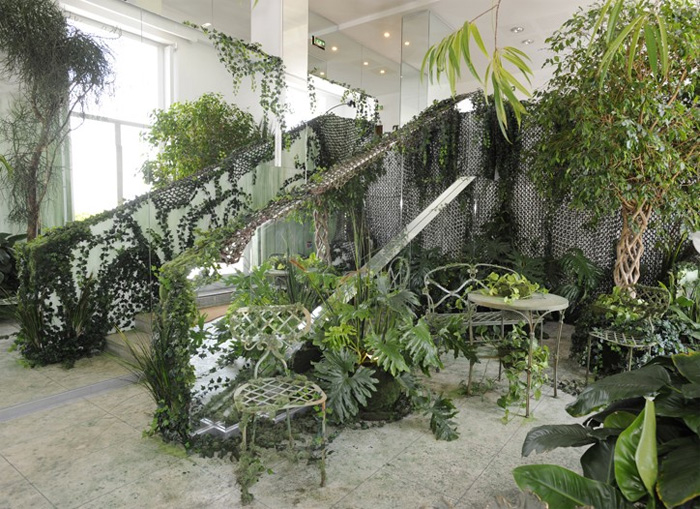
I fantasize about living in a Rainforest, because of the fresh, live, green scenery and abundance of food, but I can just as easily surround myself with dangling and potted plants, and food in my home.

The three main household toxins of concern are benzene, formaldehyde, and trichloroethylene, which can be removed by adding an abundance of house plants. Imagine creating your own Rainforest Jungle in your home, which would create fresh air as the plants absorb CO2, remove toxins, naturally humidifies air, and the greenery creates an uplifting mood/atmosphere during the dead or dreary Fall and Winter months.


Here are some ideas that others have created...

pinterest
pinterest
pinterest
from Garden Ally
In a previous post I made a chart of the plants that are shade tolerant that would also grow well indoors:  List of shade & cold tolerant plants (vegetables, herbs, & flowers). In my post I failed to mention what plants that can be grown indoors, for example tropical plants like:


Peace Lily, Aloe Vera, Snake Plant, and Christmas cactus which I grow at my house. Other plants that grow well indoors are:
Ferns,
Ficus Alii,
Pothos,
English Ivy,
Janet Craig,
Rubber plant,
Bamboo palm,
Raphis Palm,
Areca Palm,
Snake Plant,
Spider Plant,
Mother-in-law's Tongue,
Chinese Evergreen,
Marginata,
Gerbera Daisy,
African violet, and
Orchid plant.
Photo: Natuur Puebla
photo
Grow plants by a South facing Window or Room that receives over four hours of sunlight. Water each plant thoroughly once every week or two. If I have leftover water for whatever reason, I dump the water onto a potted plant.
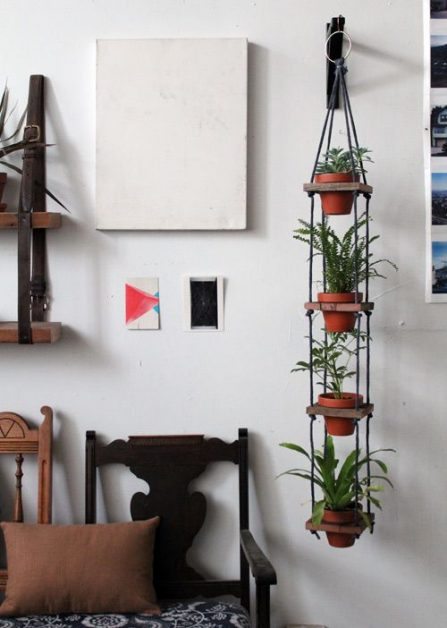
Save space by placing potted plants on shelves or hang them vertically. Utilizing vertical space will allow you to grow more plants in one area than utilizing floor space.


the rainforest garden
photo source
photo source
Todo Manualidades
pinterest


photo link

lunar harvest
photo link
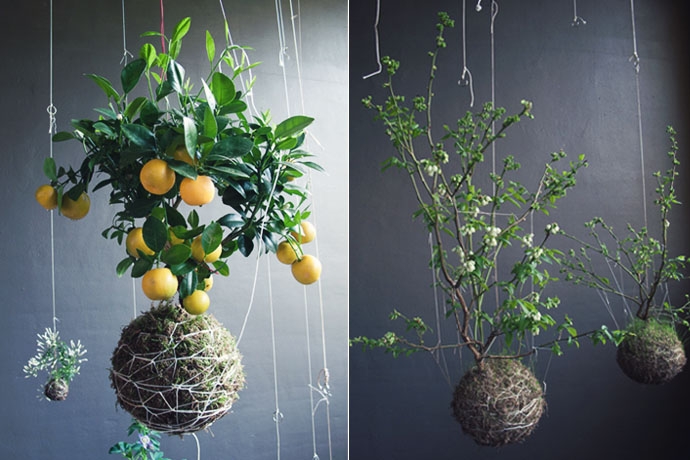
Instead of growing only Tropical house plants, try growing Trees that will produce Fruit. For instance, dwarf Orange trees, lemon and limes are small enough trees that can be grown indoors.

photo link

Tuesday, December 30, 2014

Layout of 2015 Spring, Summer & Fall Garden using polyculture, pest prevention, & companion planting

A few days ago I mentioned in the post "Seeds I bought for 2015 Garden year", I had bought 60 varieties of seeds from Vegan seeds company, as well as Luffa seeds, Goji berry seeds, and Dinosaur seeds. 
With the seeds I purchased, I divided up the Seeds for Spring & fall and the Seeds for Summer. Then I made a layout of where I want these seeds planted. So with my sunniest garden I will be planting cold crops in the Spring and Fall, and plant cold crops in my shady garden in the Summer. And in the summer, I will plant heat/sun loving crops in my sunny garden. 

I have three large gardens that span over 50 feet. My other gardens include raised beds, compost heaps, fruit trees and bushes, and patches where I have tilled around the yard. I'll only be focusing on the Layouts of 2 of the 3 Main Gardens. Last year I grew 9 rows of Corn, 4 rows of beans, and 9 rows of Melons in my third Main garden, but I plan to do something different in 2015. As for the other two garden layouts I'm showing you below, I may make alterations, because what I grow will depend how much of each seed can be squeezed into the gardens. 
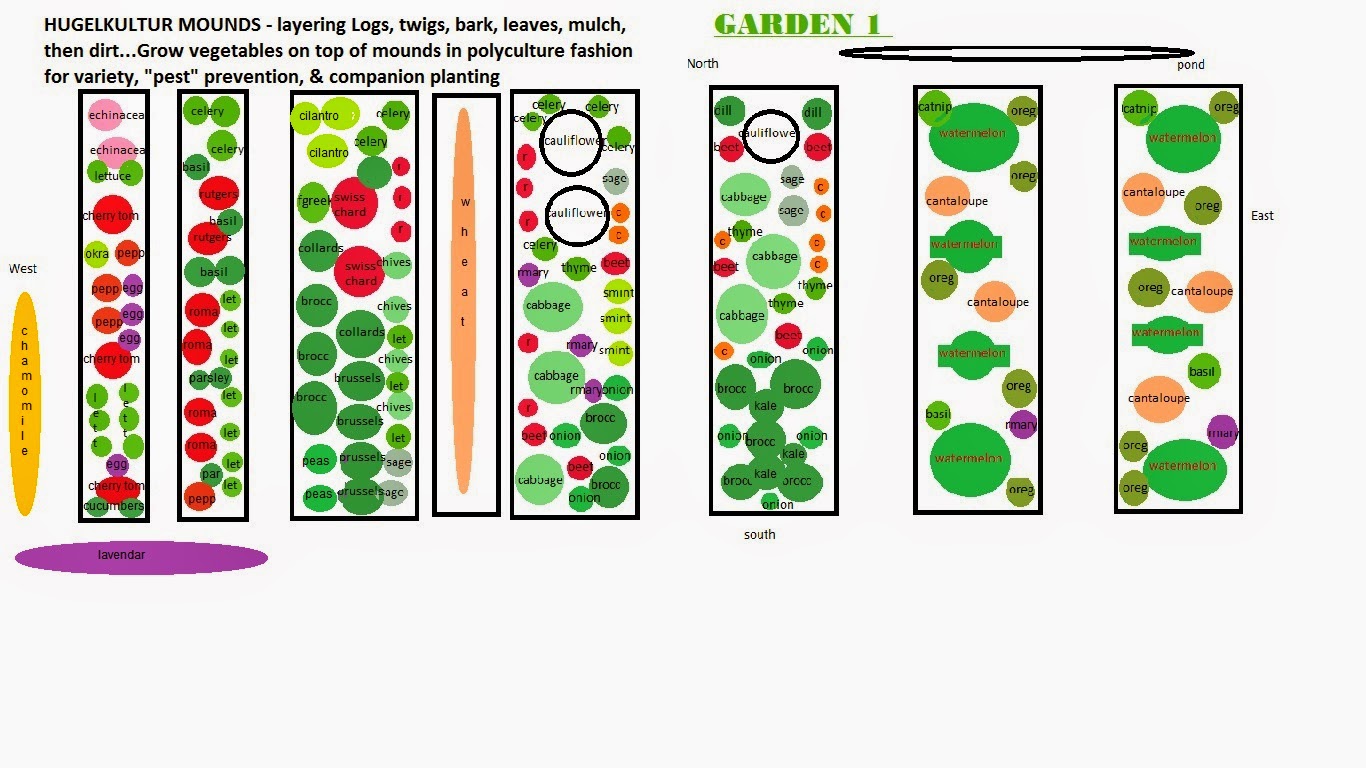
In the first photo, I show you my first Garden which is made up of rows of Hugelkultur mounds. This garden gets more sunlight year round compared to my other two gardens. This is where I grow tomatoes and peppers and sun loving fruits. In the Spring and Fall, this garden is where I will grow cold tolerant crops. This garden will focus on growing a variety of Herbs, Root crops, melons, Tomatoes, and Peppers, In the shady spots of this garden, I will place the Broccoli, cabbage, collards, and lettuce. 
You may notice where I have grown the Broccoli, Cabbage, Collards, and Brussels, I have also decided to plant herbs that will prevent pests, such as Sage, Chives, Rosemary, Garlic, Cilantro, Lavender, Basil, and onion. This polyculture design you see in the first photo creates a Unique look to a variety of plants which will prevent many pests from eating your food while attracting 
Also, keep in mind companion plants such as Tomato and Basil which grow well together. 


The second photo shows you Garden 2 of 3. This is my Grandparents' backyard that receives partial sun. This garden is perfect for growing Shade and cold crops in the Summer. Here I grow potatoes, corn, beans, and Squash. I will be using the Three Sisters method for the Corn, beans, and squash and try to keep them away from the potato garden. Apparently growing potatoes near squash inhibits growth. 


Friday, November 21, 2014

List of Shade & Cold tolerant plants (vegetables, herbs, flowers)

Greens (lettuce, cabbage, spinach) and root vegetables (beets, potatoes, turnips) are the best choices for shady gardens. To clarify, the greens and root vegetables perform better in full sun during the colder months, while they perform better in the shade during hot Summer months.
Steve Albert of Harvest to Table wrote on the topic Vegetables and Herbs for Growing in Shade stating that the advantages of growing vegetables in shade include: 1) Leafy crops grown in partial shade will be succulent and free of bitter taste; 2) A partially shaded garden allows for a longer growing period for cool-season crops; 3) Afternoon shade protects crops from the hot summer sun. 
 
photo source: The Garden of Eaden


Fruiting vegetables such as tomatoes, peppers, and eggplants grow poorly in shade, however. What I have noticed with Tomatoes grown in partial shade , they focus on growing tall to reach sunlight, instead of focusing on growing a strong stable stalk to support large fruits.

Steve Albert lists some of his own tips for growing in shade, for example: 1) Choose vegetables and herbs adapted to shade; 2) Start crops for shady gardens indoors to speed harvest; germination and early seedling growth can begin under optimal conditions before transplanting to the shady site; 3) Pruning away low tree branches and thinning out high branches will allow more sunlight to reach the garden; 4) Painting nearby walls or fences white will allow more light to bounce into the garden. I have even seen gardeners use aluminum foil to reflect light; 6) Grow crops in containers so that they can be moved into sunny spots as the seasons change.

In the tables below, I have listed Vegetables, herbs, and flowers adapted to growing in partially shaded gardens. A partially shaded garden receives at least  2-6 hours of direct sun according to Steve Albert. This list also includes vegetables and herbs that can be grown in colder (climates) or during cooler months (Spring & Fall): 

Vegetables & Greens


Arugula
Beets
Broccoli
Brussels sprouts
Cabbage
Carrots
Cauliflower
Celery
Chard
Cilantro
Endive
Escarole
Garlic
Horseradish
Kale
Kohlrabi
Leaf lettuce
Leeks
Mustard
Napa cabbage
Parsnips 
Peas
Potatoes
Radishes
Rutabagas
Salsify scallion
Sorrel
Spinach
Turnips
Watercress


 Herbs 


Angelica
Basil
Black Cohosh
Bloodroot
Catnip
Chervil
Chives
Costmary
Downy Rattlesnake Plantain
Garden cress
Germander
Ginger
Goldenseal
Lemon balm
Lovage
Mint
Parsley
Rosemary
Solomon’s seal
Spikenard
Sweet flag
Sweet woodruff
Thyme
Wood Poppy


Flowers & Perennials


Alpine
Alstilbe 
Anemone 
Balsam 
Bee balm 
Beefsteak Plant
Bergenia
Browallia
Brunnera
Coleus
 Cowslip Primrose
Ferns
Foamy bells
Fuchsia
Hostas
Impatiens
Jacob's Ladder
Lilyturf
Lobelia
 Oxalis
Perilla
Polka-dot plant
Torenia
Viola

The picture below demonstrates growing shade tolerant Vegetables, greens, and flowers in a polyculture system. 
photo source: Shawna Coronado
Above I mentioned growing varieties of Hostas, Ferns, Lilyturf, and other shade tolerant Perennials which you can see demonstrated in the photo here:


photo source: Dirty thoughts a gardening life